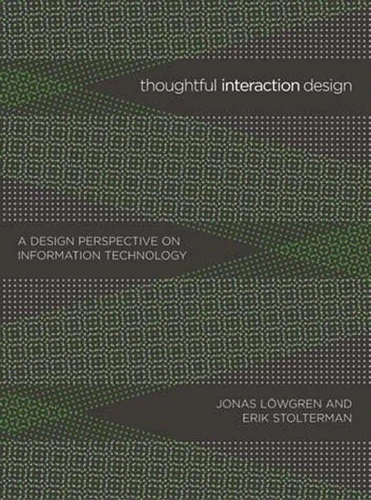
Thoughtful Interaction Design. A Design Perspective on Information Technology
Par : ,Formats :
Disponible dans votre compte client Decitre ou Furet du Nord dès validation de votre commande. Le format ePub protégé est :
- Compatible avec une lecture sur My Vivlio (smartphone, tablette, ordinateur)
- Compatible avec une lecture sur liseuses Vivlio
- Pour les liseuses autres que Vivlio, vous devez utiliser le logiciel Adobe Digital Edition. Non compatible avec la lecture sur les liseuses Kindle, Remarkable et Sony
- Non compatible avec un achat hors France métropolitaine
 , qui est-ce ?
Notre partenaire de plateforme de lecture numérique où vous retrouverez l'ensemble de vos ebooks gratuitement
Pour en savoir plus sur nos ebooks, consultez notre aide en ligne ici
C'est si simple ! Lisez votre ebook avec l'app Vivlio sur votre tablette, mobile ou ordinateur :

- Nombre de pages216
- FormatePub
- ISBN978-0-262-29692-2
- EAN9780262296922
- Date de parution26/01/2007
- Protection num.Adobe DRM
- Taille857 Ko
- Infos supplémentairesepub
- ÉditeurThe MIT Press
Résumé
The authors of Thoughtful Interaction Design go beyond the usual technical concerns of usability and usefulness to consider interaction design from a design perspective. The shaping of digital artifacts is a design process that influences the form and functions of workplaces, schools, communication, and culture; the successful interaction designer must use both ethical and aesthetic judgment to create designs that are appropriate to a given environment.
This book is not a how-to manual, but a collection of tools for thought about interaction design. Working with information technology-called by the authors "the material without qualities"-interaction designers create not a static object but a dynamic pattern of interactivity. The design vision is closely linked to context and not simply focused on the technology. The authors' action-oriented and context-dependent design theory, drawing on design theorist Donald Schön's concept of the reflective practitioner, helps designers deal with complex design challenges created by new technology and new knowledge.
Their approach, based on a foundation of thoughtfulness that acknowledges the designer's responsibility not only for the functional qualities of the design product but for the ethical and aesthetic qualities as well, fills the need for a theory of interaction design that can increase and nurture design knowledge. From this perspective they address the fundamental question of what kind of knowledge an aspiring designer needs, discussing the process of design, the designer, design methods and techniques, the design product and its qualities, and conditions for interaction design.
This book is not a how-to manual, but a collection of tools for thought about interaction design. Working with information technology-called by the authors "the material without qualities"-interaction designers create not a static object but a dynamic pattern of interactivity. The design vision is closely linked to context and not simply focused on the technology. The authors' action-oriented and context-dependent design theory, drawing on design theorist Donald Schön's concept of the reflective practitioner, helps designers deal with complex design challenges created by new technology and new knowledge.
Their approach, based on a foundation of thoughtfulness that acknowledges the designer's responsibility not only for the functional qualities of the design product but for the ethical and aesthetic qualities as well, fills the need for a theory of interaction design that can increase and nurture design knowledge. From this perspective they address the fundamental question of what kind of knowledge an aspiring designer needs, discussing the process of design, the designer, design methods and techniques, the design product and its qualities, and conditions for interaction design.