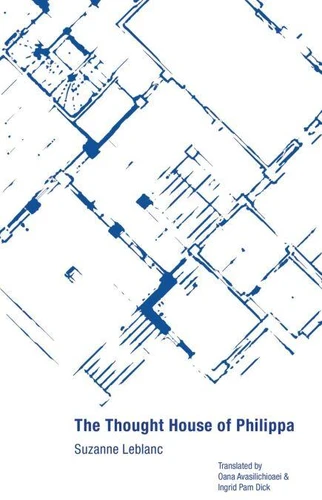



Suzanne Leblanc has a PhD in philosophy (1983) and in visual arts (2004) and has been teaching since 2003 at the School of Visual Arts at the University of Laval (Quebec). She has exhibited multi-media installations in Quebec and has published theoretical works in Germany, France, Switzerland and Canada. Her research and creative work deal with philosophical forms inherent in artistic disciplines.
She is currently leading a research-creation group on artistic strategies for the spatialization of knowledge. La maison à penser de P. (La Peuplade, 2010) is her first novel. Montreal-based writer, translator, and editor Oana Avasilichioaei has published five poetry collections, including Expeditions of a Chimaera (with Erín Moure; 2009), We, Beasts (2012; winner of the A. M. Klein Prize for Poetry from the Quebec Writers' Federation) and Limbinal (2015).
Previous translations include Bertrand Laverdure's Universal Bureau of Copyrights (2014; shortlisted for the 2015 ReLit Awards), Suzanne Leblanc's The Thought House of Philippa (co-translated with Ingrid Pam Dick; 2015), and Daniel Canty's Wigrum (2013). Her translation of Bertrand Laverdure's Readopolis won the 2017 Governor General's Literary Award for Translation.
She is currently leading a research-creation group on artistic strategies for the spatialization of knowledge. La maison à penser de P. (La Peuplade, 2010) is her first novel. Montreal-based writer, translator, and editor Oana Avasilichioaei has published five poetry collections, including Expeditions of a Chimaera (with Erín Moure; 2009), We, Beasts (2012; winner of the A. M. Klein Prize for Poetry from the Quebec Writers' Federation) and Limbinal (2015).
Previous translations include Bertrand Laverdure's Universal Bureau of Copyrights (2014; shortlisted for the 2015 ReLit Awards), Suzanne Leblanc's The Thought House of Philippa (co-translated with Ingrid Pam Dick; 2015), and Daniel Canty's Wigrum (2013). Her translation of Bertrand Laverdure's Readopolis won the 2017 Governor General's Literary Award for Translation.