SOLDES
Jusqu'à -70% sur une sélection d'articles*

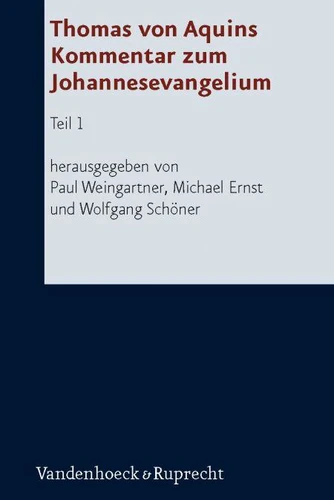
Thomas von Aquins Kommentar zum Johannesevangelium. Teil 1
Par : , ,Formats :
Disponible dans votre compte client Decitre ou Furet du Nord dès validation de votre commande. Le format PDF est :
- Compatible avec une lecture sur My Vivlio (smartphone, tablette, ordinateur)
- Compatible avec une lecture sur liseuses Vivlio
- Pour les liseuses autres que Vivlio, vous devez utiliser le logiciel Adobe Digital Edition. Non compatible avec la lecture sur les liseuses Kindle, Remarkable et Sony
 , qui est-ce ?
Notre partenaire de plateforme de lecture numérique où vous retrouverez l'ensemble de vos ebooks gratuitement
Pour en savoir plus sur nos ebooks, consultez notre aide en ligne ici
C'est si simple ! Lisez votre ebook avec l'app Vivlio sur votre tablette, mobile ou ordinateur :

- Nombre de pages534
- FormatPDF
- ISBN978-3-647-51005-7
- EAN9783647510057
- Date de parution06/10/2011
- Protection num.pas de protection
- Taille4 Mo
- Infos supplémentairespdf
- ÉditeurVandenhoeck & Ruprecht
Résumé
The commentary of Thomas Aquinas on the Gospel of John is a masterpiece of Christian exegesis. According to Otto Hermann Pesch, who translated and edited several volumes of the German edition of Thomas Aquinas, this commentary immediately preceded his development of Christology in the Summa Theologiae and represents Thomas at the pinnacle of his exegetic skills. His take on the Gospel begins with a systematic ordering of what the Evangelist intended and how he went about realising it.
Based on this framework he then provides the various interpretations, for example, factual-historical ones concerning aspects of the Jewish religion and everyday life, the topography of the Holy Land, the meaning of certain names of towns and persons or the chronology of the events in the life of Christ. Thomas always attempts to find explanations for the differences present in the other Gospels. Further, especially in the first 11 lectiones, he refers to Aristotle and many questions with philosophical implications (for example, of the meaning of the term "word" - logos).
Next, Thomas relates the verse from the Gospel in question to other Biblical and non-Biblical texts. He also devotes much effort to the disputes going on with the heresies, which he attempts to refute by showing the contradiction in their arguments with the Bible.
Based on this framework he then provides the various interpretations, for example, factual-historical ones concerning aspects of the Jewish religion and everyday life, the topography of the Holy Land, the meaning of certain names of towns and persons or the chronology of the events in the life of Christ. Thomas always attempts to find explanations for the differences present in the other Gospels. Further, especially in the first 11 lectiones, he refers to Aristotle and many questions with philosophical implications (for example, of the meaning of the term "word" - logos).
Next, Thomas relates the verse from the Gospel in question to other Biblical and non-Biblical texts. He also devotes much effort to the disputes going on with the heresies, which he attempts to refute by showing the contradiction in their arguments with the Bible.