SOLDES
Jusqu'à -70% sur une sélection d'articles*

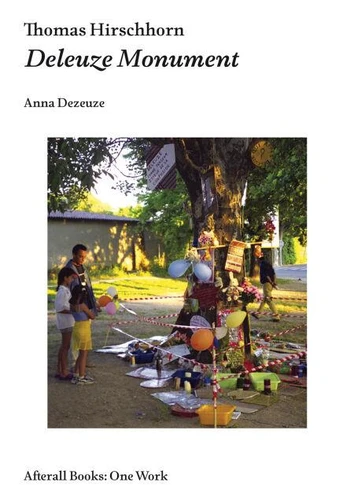
Thomas Hirschhorn. Deleuze Monument
Par :Formats :
Disponible dans votre compte client Decitre ou Furet du Nord dès validation de votre commande. Le format ePub protégé est :
- Compatible avec une lecture sur My Vivlio (smartphone, tablette, ordinateur)
- Compatible avec une lecture sur liseuses Vivlio
- Pour les liseuses autres que Vivlio, vous devez utiliser le logiciel Adobe Digital Edition. Non compatible avec la lecture sur les liseuses Kindle, Remarkable et Sony
- Non compatible avec un achat hors France métropolitaine
 , qui est-ce ?
Notre partenaire de plateforme de lecture numérique où vous retrouverez l'ensemble de vos ebooks gratuitement
Pour en savoir plus sur nos ebooks, consultez notre aide en ligne ici
C'est si simple ! Lisez votre ebook avec l'app Vivlio sur votre tablette, mobile ou ordinateur :

- Nombre de pages100
- FormatePub
- ISBN978-1-84638-146-1
- EAN9781846381461
- Date de parution29/08/2014
- Protection num.Adobe DRM
- Taille16 Mo
- Infos supplémentairesepub
- ÉditeurAfterall Books
Résumé
An illustrated examination of one of Hirschhorn's "precarious" monuments, now dismantled. Part-text, part-sculpture, part-architecture, part-junk heap, Thomas Hirschhorn's often monumental but precarious works offer a commentary on the spectacle of late-capitalist consumerism and the global proliferation of commodities. Made from ephemeral materials-cardboard, foil, plastic bags, and packing tape-that the artist describes as "universal, economic, inclusive, and [without] any plus-value, " these works also engage issues of justice, power, and moral responsibility.
Hirschhorn (born in Switzerland in 1957) often chooses to place his work in non-art settings, saying that he wants it to "fight for its own existence." In this book, Anna Dezeuze offers a generously illustrated examination of Hirschhorn's Deleuze Monument (2000), the second in his series of four Monuments. Deleuze Monument-a sculpture, an altar, and a library dedicated to Gilles Deleuze-was conceived as a work open to visitors twenty-four hours a day, seven days a week.
Part of the exhibition "La Beauté" in Avignon, Deleuze Monument was controversial from the start, and it was dismantled two months before the end of the exhibition after being vandalized. Dezeuze describes the chronology of the project, including negotiations with local residents; the dynamic between affirmation and vulnerability in Hirschhorn's work; failure and "scatter art" in the 1990s; participatory practices; and problems of presence, maintenance, and appearance, raised by Hirschhorn's acknowledgement of "error" in his discontinuous presence on site following the installation of Deleuze Monument.
Hirschhorn (born in Switzerland in 1957) often chooses to place his work in non-art settings, saying that he wants it to "fight for its own existence." In this book, Anna Dezeuze offers a generously illustrated examination of Hirschhorn's Deleuze Monument (2000), the second in his series of four Monuments. Deleuze Monument-a sculpture, an altar, and a library dedicated to Gilles Deleuze-was conceived as a work open to visitors twenty-four hours a day, seven days a week.
Part of the exhibition "La Beauté" in Avignon, Deleuze Monument was controversial from the start, and it was dismantled two months before the end of the exhibition after being vandalized. Dezeuze describes the chronology of the project, including negotiations with local residents; the dynamic between affirmation and vulnerability in Hirschhorn's work; failure and "scatter art" in the 1990s; participatory practices; and problems of presence, maintenance, and appearance, raised by Hirschhorn's acknowledgement of "error" in his discontinuous presence on site following the installation of Deleuze Monument.