
Robert Tombs is Emeritus Professor of French History at Cambridge, and a Fellow of St John's College. Most of his writing and teaching has been on French and European history and on Franco-British relations, for which he was awarded the Palmes Académiques by the French government. Since his foray into English history, with the publication of The English and Their History in 2014, he has become a frequent commentator on contemporary issues, and is co-editor of the pro-Brexit academic website Briefings for Britain.
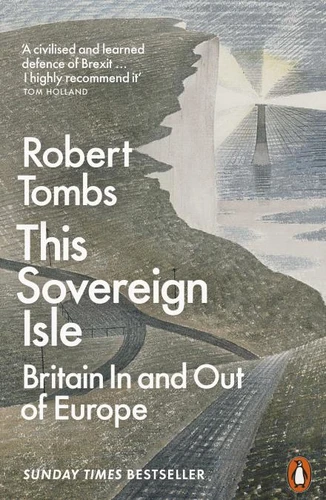
This Sovereign Isle. Britain In and Out of Europe
Par :Formats :
Disponible dans votre compte client Decitre ou Furet du Nord dès validation de votre commande. Le format ePub protégé est :
- Compatible avec une lecture sur My Vivlio (smartphone, tablette, ordinateur)
- Compatible avec une lecture sur liseuses Vivlio
- Pour les liseuses autres que Vivlio, vous devez utiliser le logiciel Adobe Digital Edition. Non compatible avec la lecture sur les liseuses Kindle, Remarkable et Sony
- Non compatible avec un achat hors France métropolitaine
 , qui est-ce ?
Notre partenaire de plateforme de lecture numérique où vous retrouverez l'ensemble de vos ebooks gratuitement
Pour en savoir plus sur nos ebooks, consultez notre aide en ligne ici
C'est si simple ! Lisez votre ebook avec l'app Vivlio sur votre tablette, mobile ou ordinateur :

- Nombre de pages224
- FormatePub
- ISBN978-0-14-199503-8
- EAN9780141995038
- Date de parution28/01/2021
- Protection num.Adobe DRM
- Infos supplémentairesepub
- ÉditeurPENGUIN
Résumé
THE TOP TEN SUNDAY TIMES BESTSELLERGeography comes before history. Islands cannot have the same history as continental plains. The United Kingdom is a European country, but not the same kind of European country as Germany, Poland or Hungary. For most of the 150 centuries during which Britain has been inhabited it has been on the edge, culturally and literally, of mainland Europe. In this succinct book, Tombs shows that the decision to leave the EU is historically explicable - though not made historically inevitable - by Britain's very different historical experience, especially in the twentieth century, and because of our more extensive and deeper ties outside Europe.
He challenges the orthodox view that Brexit was due solely to British or English exceptionalism: in choosing to leave the EU, the British, he argues, were in many ways voting as typical Europeans.
He challenges the orthodox view that Brexit was due solely to British or English exceptionalism: in choosing to leave the EU, the British, he argues, were in many ways voting as typical Europeans.
A propos de Robert Tombs

11,99 €

La guerre contre Paris, 1871
Grand Format
25,40 €