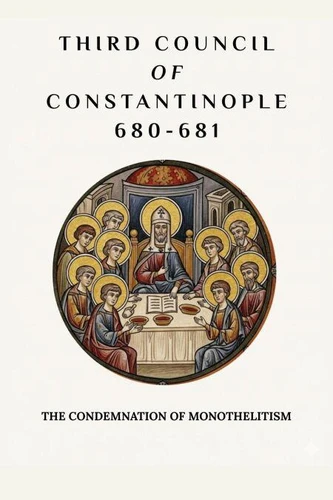
When an Empire's Theology Nearly Destroyed the Faith: The Untold Story of Christianity's Most Dangerous CompromiseConstantinople, 680-681 AD. As Arab armies conquer the empire's heartlands, bishops gather to settle a question that has consumed Christianity for fifty years: Did Jesus Christ possess one will or two?Men have been mutilated for their answer. Popes exiled. The brilliant theologian Maximus the Confessor had his tongue cut out and hand severed for refusing imperial heresy, dying in frozen exile as testimony to truths the State demanded he deny.
This book reveals:The political machinations of Emperor Heraclius, whose theological compromise to save his empire accelerated its collapse instead. The isolated courage of Sophronius, Patriarch of Jerusalem, who stood virtually alone against combined imperial power. The shocking arrest and martyrdom of Pope Martin I, tried for treason and exiled to die in Crimea for defending orthodox doctrine. The unprecedented condemnation of Pope Honorius I by an ecumenical council for promoting heresy - a judgment that still troubles Catholic theology.
The dramatic eighteen-session deliberations as bishops systematically dismantled fifty years of imperial theology. Why It Matters:The Third Council of Constantinople completed Christianity's definition of who Christ truly is. Its teaching that Christ possessed two natural wills - divine and human - in perfect harmony preserved the gospel against heresy that would have rendered salvation impossible.
Written with academic rigor but narrative drive, this synthesis of specialized scholarship reads like a thriller while requiring no prior theological training. The crisis tested whether truth could survive when emperors, patriarchs, and even a pope aligned against it. The answer echoes across centuries: truth possesses authority that political power cannot destroy.
When an Empire's Theology Nearly Destroyed the Faith: The Untold Story of Christianity's Most Dangerous CompromiseConstantinople, 680-681 AD. As Arab armies conquer the empire's heartlands, bishops gather to settle a question that has consumed Christianity for fifty years: Did Jesus Christ possess one will or two?Men have been mutilated for their answer. Popes exiled. The brilliant theologian Maximus the Confessor had his tongue cut out and hand severed for refusing imperial heresy, dying in frozen exile as testimony to truths the State demanded he deny.
This book reveals:The political machinations of Emperor Heraclius, whose theological compromise to save his empire accelerated its collapse instead. The isolated courage of Sophronius, Patriarch of Jerusalem, who stood virtually alone against combined imperial power. The shocking arrest and martyrdom of Pope Martin I, tried for treason and exiled to die in Crimea for defending orthodox doctrine. The unprecedented condemnation of Pope Honorius I by an ecumenical council for promoting heresy - a judgment that still troubles Catholic theology.
The dramatic eighteen-session deliberations as bishops systematically dismantled fifty years of imperial theology. Why It Matters:The Third Council of Constantinople completed Christianity's definition of who Christ truly is. Its teaching that Christ possessed two natural wills - divine and human - in perfect harmony preserved the gospel against heresy that would have rendered salvation impossible.
Written with academic rigor but narrative drive, this synthesis of specialized scholarship reads like a thriller while requiring no prior theological training. The crisis tested whether truth could survive when emperors, patriarchs, and even a pope aligned against it. The answer echoes across centuries: truth possesses authority that political power cannot destroy.

 , qui est-ce ?