Nouveauté
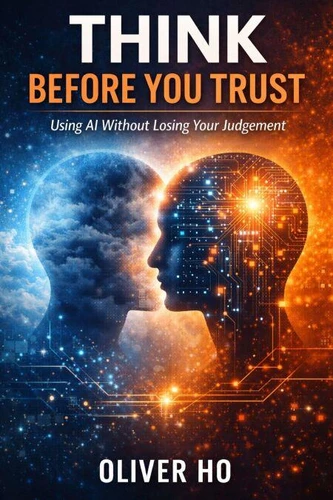
Think Before You Trust: Using AI Without Losing Your Judgement
Par :Formats :
Disponible dans votre compte client Decitre ou Furet du Nord dès validation de votre commande. Le format ePub est :
- Compatible avec une lecture sur My Vivlio (smartphone, tablette, ordinateur)
- Compatible avec une lecture sur liseuses Vivlio
- Pour les liseuses autres que Vivlio, vous devez utiliser le logiciel Adobe Digital Edition. Non compatible avec la lecture sur les liseuses Kindle, Remarkable et Sony
 , qui est-ce ?
Notre partenaire de plateforme de lecture numérique où vous retrouverez l'ensemble de vos ebooks gratuitement
Pour en savoir plus sur nos ebooks, consultez notre aide en ligne ici
C'est si simple ! Lisez votre ebook avec l'app Vivlio sur votre tablette, mobile ou ordinateur :

- FormatePub
- ISBN8235811171
- EAN9798235811171
- Date de parution24/07/2026
- Protection num.pas de protection
- Infos supplémentairesepub
- ÉditeurIoakim Ioakim
Résumé
Artificial intelligence has become part of everyday life. It answers questions, generates ideas, and supports decisions with increasing speed and clarity. In many ways, it makes thinking easier. But when thinking becomes easier, it is also used less. Think Before You Trust explores what this shift means-not in technical terms, but at the level of individual judgement. As AI becomes more capable, the challenge is no longer access to information, but how we relate to it.
This book examines how trust is formed, how decisions are influenced, and how subtle reliance on intelligent systems can reshape the way we think. It offers practical ways to remain engaged, including prompting techniques, critical evaluation tools, and a personal framework for using AI responsibly. Looking ahead, it also considers possible futures in which AI plays a much larger role in shaping human experience, raising questions about independence, responsibility, and what it means to remain fully human in a system increasingly managed by non-human intelligence.
This is not a book about rejecting technology. It is about using it with awareness. 150
This book examines how trust is formed, how decisions are influenced, and how subtle reliance on intelligent systems can reshape the way we think. It offers practical ways to remain engaged, including prompting techniques, critical evaluation tools, and a personal framework for using AI responsibly. Looking ahead, it also considers possible futures in which AI plays a much larger role in shaping human experience, raising questions about independence, responsibility, and what it means to remain fully human in a system increasingly managed by non-human intelligence.
This is not a book about rejecting technology. It is about using it with awareness. 150