What separates those who turn their ambitions into reality from those who remain trapped by hesitation, uncertainty, and fear?
In Think and Grow Rich, Napoleon Hill presents a systematic philosophy of personal achievement built around desire, faith, planning, persistence, specialized knowledge, and disciplined thought. Rather than treating success as a matter of luck, Hill argues that meaningful accomplishment begins with a clearly defined purpose and the determination to pursue it consistently.
The book examines the habits and mental attitudes that influence achievement.
Hill explores how goals become more powerful when they are specific, emotionally meaningful, and supported by organized action. He explains the importance of decision-making, cooperation, imagination, self-confidence, and the ability to continue despite temporary defeat.
Although its title emphasizes financial prosperity, the book's central principles extend beyond money. Its lessons can be applied to entrepreneurship, professional development, leadership, creative work, personal discipline, and the pursuit of long-term objectives.
Throughout the book, Hill uses examples drawn from prominent business leaders, inventors, industrialists, and public figures of his era.
From these stories, he develops a practical framework intended to help readers examine their beliefs, strengthen their sense of purpose, and replace passive wishing with deliberate action.
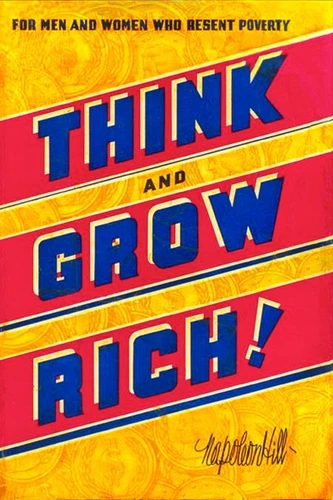
First published in 1937, Think and Grow Rich became one of the foundational works of modern success literature. Its influence can still be seen in contemporary books about motivation, goal setting, mindset, entrepreneurship, and personal development.
This edition preserves the language and ideas of the original text, allowing a new generation of readers to explore Napoleon Hill's influential philosophy of ambition, persistence, and achievement.
What separates those who turn their ambitions into reality from those who remain trapped by hesitation, uncertainty, and fear?
In Think and Grow Rich, Napoleon Hill presents a systematic philosophy of personal achievement built around desire, faith, planning, persistence, specialized knowledge, and disciplined thought. Rather than treating success as a matter of luck, Hill argues that meaningful accomplishment begins with a clearly defined purpose and the determination to pursue it consistently.
The book examines the habits and mental attitudes that influence achievement.
Hill explores how goals become more powerful when they are specific, emotionally meaningful, and supported by organized action. He explains the importance of decision-making, cooperation, imagination, self-confidence, and the ability to continue despite temporary defeat.
Although its title emphasizes financial prosperity, the book's central principles extend beyond money. Its lessons can be applied to entrepreneurship, professional development, leadership, creative work, personal discipline, and the pursuit of long-term objectives.
Throughout the book, Hill uses examples drawn from prominent business leaders, inventors, industrialists, and public figures of his era.
From these stories, he develops a practical framework intended to help readers examine their beliefs, strengthen their sense of purpose, and replace passive wishing with deliberate action.
First published in 1937, Think and Grow Rich became one of the foundational works of modern success literature. Its influence can still be seen in contemporary books about motivation, goal setting, mindset, entrepreneurship, and personal development.
This edition preserves the language and ideas of the original text, allowing a new generation of readers to explore Napoleon Hill's influential philosophy of ambition, persistence, and achievement.


 , qui est-ce ?