Our energy needs are the major contribution to greenhouse gas emissions. Fossil fuels are still largely the primary source of energy of most world economies. In this context, it is absolutely necessary to optimize energy systems so as tominimize the consumption of fossil fuels.
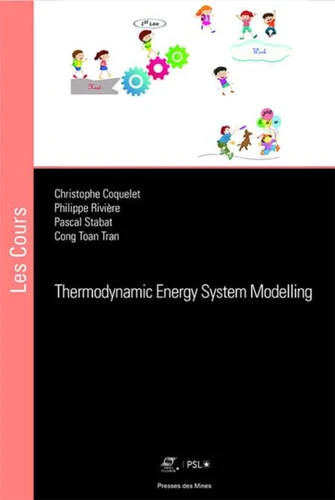
Energy system modeling is an essential step in understanding the system inefficiencies and improvement potential. This book gives a presentation of main thermodynamic concepts that are required to understand the working principles of thermodynamic cycles and to model their performances.
The focus here is put on heat to power thermodynamic cycles (gas turbines, steam vapor power plants, combined cycle and cogeneration plants) and on vapor compression cycles. For each system, the book presents the basic cycle and explains the main ideas proposed to optimize its performances, including the introduction of the exergy concept.
The main objective of the book is to present comprehensible performance analysis and improvement methods.
Even if some of the presented systems have been developed for decades, these methods are extremely useful in the reduction of energy consumption and to tackle environmental issues.
This book has been designed for students of the Masters degree in Science and Executive Engineering at MINES ParisTech and of the Energy Masters degree at PSL Research University.
Our energy needs are the major contribution to greenhouse gas emissions. Fossil fuels are still largely the primary source of energy of most world economies. In this context, it is absolutely necessary to optimize energy systems so as tominimize the consumption of fossil fuels.
Energy system modeling is an essential step in understanding the system inefficiencies and improvement potential. This book gives a presentation of main thermodynamic concepts that are required to understand the working principles of thermodynamic cycles and to model their performances.
The focus here is put on heat to power thermodynamic cycles (gas turbines, steam vapor power plants, combined cycle and cogeneration plants) and on vapor compression cycles. For each system, the book presents the basic cycle and explains the main ideas proposed to optimize its performances, including the introduction of the exergy concept.
The main objective of the book is to present comprehensible performance analysis and improvement methods.
Even if some of the presented systems have been developed for decades, these methods are extremely useful in the reduction of energy consumption and to tackle environmental issues.
This book has been designed for students of the Masters degree in Science and Executive Engineering at MINES ParisTech and of the Energy Masters degree at PSL Research University.

 , qui est-ce ?
