SOLDES
Jusqu'à -70% sur une sélection d'articles*

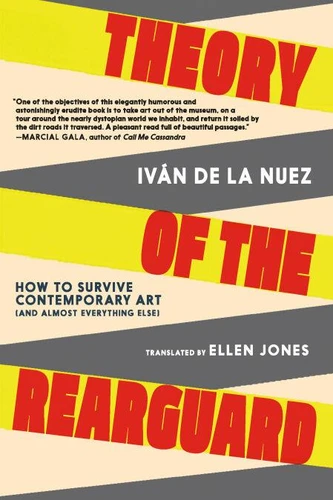
Theory of the Rearguard: How to Survive Contemporary Art
Par :Formats :
Disponible dans votre compte client Decitre ou Furet du Nord dès validation de votre commande. Le format ePub protégé est :
- Compatible avec une lecture sur My Vivlio (smartphone, tablette, ordinateur)
- Compatible avec une lecture sur liseuses Vivlio
- Pour les liseuses autres que Vivlio, vous devez utiliser le logiciel Adobe Digital Edition. Non compatible avec la lecture sur les liseuses Kindle, Remarkable et Sony
- Non compatible avec un achat hors France métropolitaine
 , qui est-ce ?
Notre partenaire de plateforme de lecture numérique où vous retrouverez l'ensemble de vos ebooks gratuitement
Pour en savoir plus sur nos ebooks, consultez notre aide en ligne ici
C'est si simple ! Lisez votre ebook avec l'app Vivlio sur votre tablette, mobile ou ordinateur :

- Nombre de pages96
- FormatePub
- ISBN978-1-64421-462-6
- EAN9781644214626
- Date de parution22/04/2025
- Protection num.Adobe DRM
- Taille4 Mo
- Infos supplémentairesepub
- ÉditeurSeven Stories Press
Résumé
Cuban art critic and curator Iván de la Nuez returns with an ironic epitaph for contemporary art. Art criticism that examines contemporary art in the 21st century in relationship to politics, iconography, and literature."Iván de la Nuez transforms art criticism into an art form." -Letras LibresTheory of the Rearguard examines how contemporary art is in tension with survival, rather than in relation to life.
In the twentieth century, Peter Bürger's Theory of the Avant-Garde was a cult book focused on the two main tasks that art demanded at the time: to break its representation and to destroy the barrier that separated it from life. Forty years later, The Theory of the Rearguard is an ironic manifesto about contemporary art and its failures, even though Iván de la Nuez does not waste his time mourning it or disguising it.
He argues that our times are not characterized by the distance between art and life, but by a tension between art and survival, which is the continuation of life by any means necessary. In the twenty-first century, Iván de la Nuez examines art in relationship to politics, iconography, and literature. This austere and sharp book-in which Duchamp stumbles upon Lupe, the revolution upon the museum, Paul Virilio upon Joan Fontcuberta or Fukuyama upon Michael Jackson-wonders if contemporary art will ever end.
Because if it were mortal-"just as mortal as everything it invokes or examines under its magnifying glass"-de la Nuez argues would be worth writing an epitaph for it as he has done in this sparkling book of art criticism.
In the twentieth century, Peter Bürger's Theory of the Avant-Garde was a cult book focused on the two main tasks that art demanded at the time: to break its representation and to destroy the barrier that separated it from life. Forty years later, The Theory of the Rearguard is an ironic manifesto about contemporary art and its failures, even though Iván de la Nuez does not waste his time mourning it or disguising it.
He argues that our times are not characterized by the distance between art and life, but by a tension between art and survival, which is the continuation of life by any means necessary. In the twenty-first century, Iván de la Nuez examines art in relationship to politics, iconography, and literature. This austere and sharp book-in which Duchamp stumbles upon Lupe, the revolution upon the museum, Paul Virilio upon Joan Fontcuberta or Fukuyama upon Michael Jackson-wonders if contemporary art will ever end.
Because if it were mortal-"just as mortal as everything it invokes or examines under its magnifying glass"-de la Nuez argues would be worth writing an epitaph for it as he has done in this sparkling book of art criticism.