SOLDES
Jusqu'à -70% sur une sélection d'articles*

Nouveauté
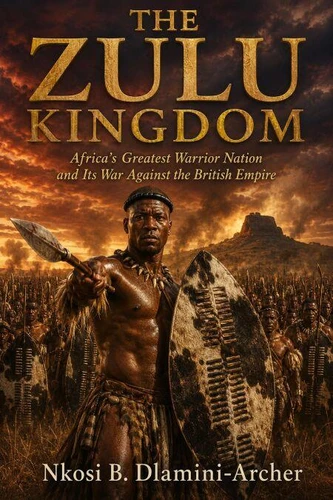
The Zulu Kingdom: Africa's Greatest Warrior Nation and Its War Against the British Empire
Par :Formats :
Disponible dans votre compte client Decitre ou Furet du Nord dès validation de votre commande. Le format ePub est :
- Compatible avec une lecture sur My Vivlio (smartphone, tablette, ordinateur)
- Compatible avec une lecture sur liseuses Vivlio
- Pour les liseuses autres que Vivlio, vous devez utiliser le logiciel Adobe Digital Edition. Non compatible avec la lecture sur les liseuses Kindle, Remarkable et Sony
 , qui est-ce ?
Notre partenaire de plateforme de lecture numérique où vous retrouverez l'ensemble de vos ebooks gratuitement
Pour en savoir plus sur nos ebooks, consultez notre aide en ligne ici
C'est si simple ! Lisez votre ebook avec l'app Vivlio sur votre tablette, mobile ou ordinateur :

- FormatePub
- ISBN8235349711
- EAN9798235349711
- Date de parution07/06/2026
- Protection num.pas de protection
- Infos supplémentairesepub
- ÉditeurIoakim Ioakim
Résumé
In January 1879, a British army marched into Zululand with the confidence of an empire that had never seriously questioned its own invincibility. Before noon on the twenty-second, over thirteen hundred of its soldiers were dead, and the most powerful military machine on earth had been humiliated by warriors carrying spears. This book is the story of how that became possible. The Zulu Kingdom is the definitive chronicle of Africa's greatest warrior nation, from the improbable birth of a bastard prince who would become the most feared military genius of his era, to the catastrophic morning at Isandlwana that shook Queen Victoria's empire to its foundations.
It is the story of Shaka Zulu, the man who transformed a minor clan of fifteen hundred people into a continental superpower within a single decade, building a military system so innovative that professional historians still study it today. It is the story of warriors who ran barefoot across rocky ground, covering fifty miles a day, and fought with a discipline and courage that stunned every opponent they faced.
And it is the story of what happened when that warrior nation met an empire that could not afford to let it survive. Nkosi B. Dlamini-Archer does not flatten this story into comfortable heroes and villains. Shaka was a military revolutionary and a man capable of terrifying cruelty. The warriors who shook the empire at Isandlwana were brave soldiers defending their homes. The British who held Rorke's Drift through a night of sustained attack were genuinely heroic.
And the colonial officials who manufactured the war were acting on calculations that had nothing to do with justice and everything to do with power. Drawing on Zulu oral tradition, colonial archives, battlefield accounts, and the latest historical scholarship, this book places you inside the story at every stage: inside the king's court where Shaka reviewed his regiments with the eye of a man who had invented a new kind of warfare; inside the chaos of Isandlwana as the British line broke and thirteen hundred men fell in an afternoon; inside the burning hospital at Rorke's Drift where Private Henry Hook fought through room after room to save men who could not walk; and inside Cetshwayo's mind as he watched the British hollow square advance toward Ulundi and understood that everything his people had built was about to become ash.
From the first chapter to the last, The Zulu Kingdom reads like a thriller and informs like a masterwork of historical scholarship. It is the book this story has always deserved, and the one you will not put down.
It is the story of Shaka Zulu, the man who transformed a minor clan of fifteen hundred people into a continental superpower within a single decade, building a military system so innovative that professional historians still study it today. It is the story of warriors who ran barefoot across rocky ground, covering fifty miles a day, and fought with a discipline and courage that stunned every opponent they faced.
And it is the story of what happened when that warrior nation met an empire that could not afford to let it survive. Nkosi B. Dlamini-Archer does not flatten this story into comfortable heroes and villains. Shaka was a military revolutionary and a man capable of terrifying cruelty. The warriors who shook the empire at Isandlwana were brave soldiers defending their homes. The British who held Rorke's Drift through a night of sustained attack were genuinely heroic.
And the colonial officials who manufactured the war were acting on calculations that had nothing to do with justice and everything to do with power. Drawing on Zulu oral tradition, colonial archives, battlefield accounts, and the latest historical scholarship, this book places you inside the story at every stage: inside the king's court where Shaka reviewed his regiments with the eye of a man who had invented a new kind of warfare; inside the chaos of Isandlwana as the British line broke and thirteen hundred men fell in an afternoon; inside the burning hospital at Rorke's Drift where Private Henry Hook fought through room after room to save men who could not walk; and inside Cetshwayo's mind as he watched the British hollow square advance toward Ulundi and understood that everything his people had built was about to become ash.
From the first chapter to the last, The Zulu Kingdom reads like a thriller and informs like a masterwork of historical scholarship. It is the book this story has always deserved, and the one you will not put down.