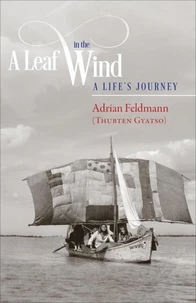



Born in Melbourne, Australia, in 1943, Dr Adrian Feldmann graduated from the University of Melbourne with a degree in medicine. After practising medicine in Australia and England, he travelled through Afghanistan, Pakistan, and India, eventually finding his way to a Tibetan monastery in Nepal. After intensive study and meditation, he became ordained as the Buddhist monk, Thubten Gyatso. Since then he has run a free medical clinic in Nepal, taught Buddhism and meditation in many countries, and established monasteries in France and in the country town of Bendigo, outside Melbourne.
In 1999, he was asked by his teacher, Kyabje Thubten Zopa Rinpoche, to go to Mongolia and help establish a new Buddhist centre. Mongolia was emerging from seventy years of communist rule, during which the Stalinist purges of the 1930s virtually extinguished the traditional Mongolian Buddhist culture. He was well received in Mongolia where, apart from the classes he gave at the new centre, his teachings were presented on radio and television and published in the local newspapers.23, 000 copies of the Mongolian translation of the first edition of this book have been distributed, mostly free of charge, and it has become one of the most popular books on Buddhism in Mongolia.
After leaving Mongolia in 2003, Thubten Gyatso built a cabin in the Australian bush where he meditated in strict isolation from the world for three years.
In 1999, he was asked by his teacher, Kyabje Thubten Zopa Rinpoche, to go to Mongolia and help establish a new Buddhist centre. Mongolia was emerging from seventy years of communist rule, during which the Stalinist purges of the 1930s virtually extinguished the traditional Mongolian Buddhist culture. He was well received in Mongolia where, apart from the classes he gave at the new centre, his teachings were presented on radio and television and published in the local newspapers.23, 000 copies of the Mongolian translation of the first edition of this book have been distributed, mostly free of charge, and it has become one of the most popular books on Buddhism in Mongolia.
After leaving Mongolia in 2003, Thubten Gyatso built a cabin in the Australian bush where he meditated in strict isolation from the world for three years.