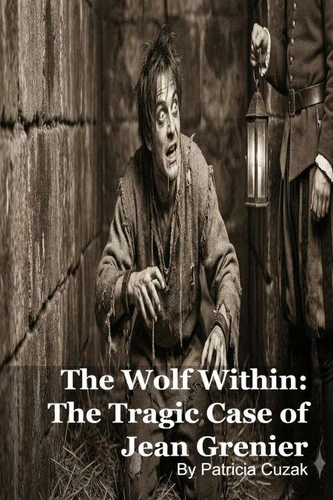
The Wolf Within: The Tragic Case of Jean GrenierIn 1603, thirteen-year-old Jean Grenier confessed to transforming into a wolf and devouring children across rural France. His disturbing claims of using a magic ointment and wolfskin to become a predator led to his arrest and trial before the Bordeaux Parlement. Rather than condemning this self-proclaimed werewolf to death, the court made an unprecedented decision, citing Grenier's "imbecility" and diminished capacity.
He was sentenced to perpetual confinement in a Franciscan monastery, where he remained for eight years until his death in 1611. The Grenier case represents a pivotal moment in legal history-establishing early precedent for considering mental illness in criminal responsibility. The monastery's approach, balancing security with therapeutic care, anticipated modern treatment of mentally ill offenders by centuries.
Chronicled by demonologist Pierre de Lancre, Grenier's story became influential throughout Europe, though often misrepresented to emphasize supernatural elements over psychological factors. Modern psychiatric interpretation suggests Jean suffered from a complex dissociative disorder stemming from childhood trauma and neglect, his "wolf" identity representing a fragmented self-state. The teenage werewolf of Bordeaux continues fascinating scholars across disciplines precisely because he embodied that blurry boundary between monster and victim, challenging our understanding of human nature's darkest transformations.
The Wolf Within: The Tragic Case of Jean GrenierIn 1603, thirteen-year-old Jean Grenier confessed to transforming into a wolf and devouring children across rural France. His disturbing claims of using a magic ointment and wolfskin to become a predator led to his arrest and trial before the Bordeaux Parlement. Rather than condemning this self-proclaimed werewolf to death, the court made an unprecedented decision, citing Grenier's "imbecility" and diminished capacity.
He was sentenced to perpetual confinement in a Franciscan monastery, where he remained for eight years until his death in 1611. The Grenier case represents a pivotal moment in legal history-establishing early precedent for considering mental illness in criminal responsibility. The monastery's approach, balancing security with therapeutic care, anticipated modern treatment of mentally ill offenders by centuries.
Chronicled by demonologist Pierre de Lancre, Grenier's story became influential throughout Europe, though often misrepresented to emphasize supernatural elements over psychological factors. Modern psychiatric interpretation suggests Jean suffered from a complex dissociative disorder stemming from childhood trauma and neglect, his "wolf" identity representing a fragmented self-state. The teenage werewolf of Bordeaux continues fascinating scholars across disciplines precisely because he embodied that blurry boundary between monster and victim, challenging our understanding of human nature's darkest transformations.


 , qui est-ce ?