SOLDES
Jusqu'à -70% sur une sélection d'articles*

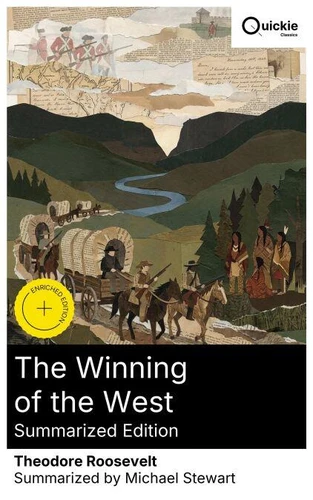
The Winning of the West (Summarized Edition). Enriched edition. Trans-Appalachian Frontier History: Cumberland Gap migrations, George Rogers Clark campaigns, the Ohio Valley, and Indigenous resistance
Par : ,Formats :
Disponible dans votre compte client Decitre ou Furet du Nord dès validation de votre commande. Le format ePub est :
- Compatible avec une lecture sur My Vivlio (smartphone, tablette, ordinateur)
- Compatible avec une lecture sur liseuses Vivlio
- Pour les liseuses autres que Vivlio, vous devez utiliser le logiciel Adobe Digital Edition. Non compatible avec la lecture sur les liseuses Kindle, Remarkable et Sony
 , qui est-ce ?
Notre partenaire de plateforme de lecture numérique où vous retrouverez l'ensemble de vos ebooks gratuitement
Pour en savoir plus sur nos ebooks, consultez notre aide en ligne ici
C'est si simple ! Lisez votre ebook avec l'app Vivlio sur votre tablette, mobile ou ordinateur :

- Nombre de pages344
- FormatePub
- ISBN859-65--4787747-9
- EAN8596547877479
- Date de parution10/01/2026
- Protection num.Digital Watermarking
- Taille1021 Ko
- Infos supplémentairesepub
- ÉditeurBiblioLife
Résumé
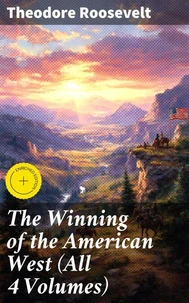
The Winning of the West (Complete Edition) gathers Roosevelt's sweeping four-volume history of the trans-Appalachian frontier, from the 1770s into the early republic. In vigorous, sinewy prose, he traces migration into Kentucky and the Ohio Valley; the campaigns of George Rogers Clark and Andrew Jackson; figures such as Daniel Boone; and brutal contests among U. S., British, Spanish, and diverse Native nations.
Grounded in letters, state papers, and frontier memoirs, the book belongs to Gilded-Age nationalist historiography and foreshadows elements of Turner's later frontier thesis. Roosevelt writes as both trained historian and participant-observer. Educated at Harvard and author of The Naval War of 1812, he also lived as a Dakota rancher, experiences that shaped his creed of the "strenuous life" and his admiration for militia republicanism.
His synthesis reflects late nineteenth-century assumptions-especially racialized hierarchies and civilizational teleology-yet it draws impressively on scattered primary sources to argue that frontier self-government forged American character. Recommended for readers of U. S. political and military history, Indigenous-settler relations, and historiography, this edition rewards close reading for both granular detail and the myths it helped build, inviting study, debate, and critical engagement. Quickie Classics summarizes timeless works with precision, preserving the author's voice and keeping the prose clear, fast, and readable-distilled, never diluted.
Enriched Edition extras: Introduction · Synopsis · Historical Context · Author Biography · Brief Analysis · 4 Reflection Q&As · Editorial Footnotes.
Grounded in letters, state papers, and frontier memoirs, the book belongs to Gilded-Age nationalist historiography and foreshadows elements of Turner's later frontier thesis. Roosevelt writes as both trained historian and participant-observer. Educated at Harvard and author of The Naval War of 1812, he also lived as a Dakota rancher, experiences that shaped his creed of the "strenuous life" and his admiration for militia republicanism.
His synthesis reflects late nineteenth-century assumptions-especially racialized hierarchies and civilizational teleology-yet it draws impressively on scattered primary sources to argue that frontier self-government forged American character. Recommended for readers of U. S. political and military history, Indigenous-settler relations, and historiography, this edition rewards close reading for both granular detail and the myths it helped build, inviting study, debate, and critical engagement. Quickie Classics summarizes timeless works with precision, preserving the author's voice and keeping the prose clear, fast, and readable-distilled, never diluted.
Enriched Edition extras: Introduction · Synopsis · Historical Context · Author Biography · Brief Analysis · 4 Reflection Q&As · Editorial Footnotes.
A propos de Theodore Roosevelt



0,99 €