OFFRE LISEUSES
Une liseuse achetée = une housse offerte* jusqu'au 21 juin

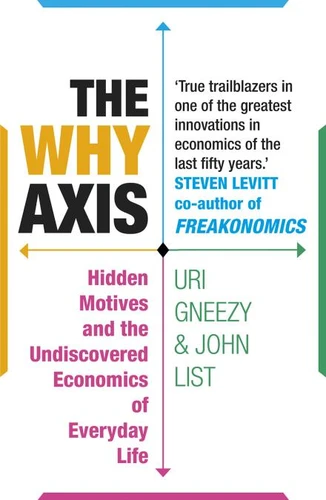
The Why Axis. Hidden Motives and the Undiscovered Economics of Everyday Life
Par : ,Formats :
Disponible dans votre compte client Decitre ou Furet du Nord dès validation de votre commande. Le format ePub protégé est :
- Compatible avec une lecture sur My Vivlio (smartphone, tablette, ordinateur)
- Compatible avec une lecture sur liseuses Vivlio
- Pour les liseuses autres que Vivlio, vous devez utiliser le logiciel Adobe Digital Edition. Non compatible avec la lecture sur les liseuses Kindle, Remarkable et Sony
- Non compatible avec un achat hors France métropolitaine
 , qui est-ce ?
Notre partenaire de plateforme de lecture numérique où vous retrouverez l'ensemble de vos ebooks gratuitement
Pour en savoir plus sur nos ebooks, consultez notre aide en ligne ici
C'est si simple ! Lisez votre ebook avec l'app Vivlio sur votre tablette, mobile ou ordinateur :

- Nombre de pages288
- FormatePub
- ISBN978-1-4464-7374-0
- EAN9781446473740
- Date de parution09/01/2014
- Protection num.Adobe DRM
- Infos supplémentairesepub
- ÉditeurCornerstone Digital
Résumé
Based on groundbreaking original research, The Why Axis is a colourful examination of why people do what they do - and how effective incentives can spur people to change their behaviour and achieve more. Uri Gneezy and John List are a little like the anthropologists who spend months in the field studying people in their native environments. But rather than acting as impartial observers, these two intrepid economists have set out to study the ways people act in order to try to solve major problems in society, such as the gap between rich and poor students and the violence plaguing inner city schools; the real reasons people discriminate; and the continuing pay disparity between men and women.
Their field experiments in the factories, communities, and shops where real people live, work, and play show how incentives can change outcomes. Their results will change the way you think about and take action on both small and large problems, and force us as a society to stop making assumptions and to rely instead upon the evidence of what really works.
Their field experiments in the factories, communities, and shops where real people live, work, and play show how incentives can change outcomes. Their results will change the way you think about and take action on both small and large problems, and force us as a society to stop making assumptions and to rely instead upon the evidence of what really works.