
Nouveauté
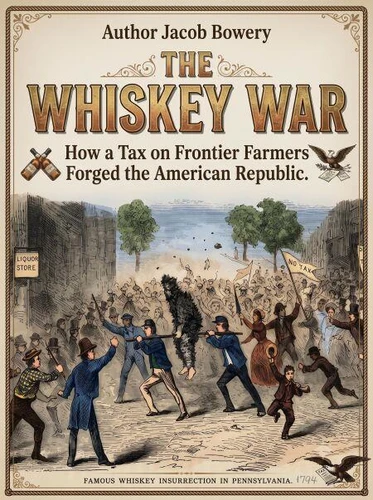
The Whiskey War: How a Tax on Frontier Farmers Forged the American Republic
Par :Formats :
Disponible dans votre compte client Decitre ou Furet du Nord dès validation de votre commande. Le format ePub est :
- Compatible avec une lecture sur My Vivlio (smartphone, tablette, ordinateur)
- Compatible avec une lecture sur liseuses Vivlio
- Pour les liseuses autres que Vivlio, vous devez utiliser le logiciel Adobe Digital Edition. Non compatible avec la lecture sur les liseuses Kindle, Remarkable et Sony
 , qui est-ce ?
Notre partenaire de plateforme de lecture numérique où vous retrouverez l'ensemble de vos ebooks gratuitement
Pour en savoir plus sur nos ebooks, consultez notre aide en ligne ici
C'est si simple ! Lisez votre ebook avec l'app Vivlio sur votre tablette, mobile ou ordinateur :

- FormatePub
- ISBN8235023406
- EAN9798235023406
- Date de parution31/07/2026
- Protection num.pas de protection
- Infos supplémentairesepub
- ÉditeurIoakim Ioakim
Résumé
In 1791, Alexander Hamilton's new federal government did something no American administration had ever done: it taxed a domestic product, sending revenue officers into frontier farmhouses across western Pennsylvania to collect cash from farmers who had none. The result was three years of tarring, burning, and petition - and then five thousand armed men assembling on a Revolutionary War battlefield, a sitting president riding to war at the head of thirteen thousand soldiers, and the first treason trials in the republic's history.
The Whiskey War tells the complete story of the Whiskey Rebellion of 1791-1794 - the first great constitutional test of the United States. Jacob Bowery reconstructs the world of the frontier still: why whiskey was currency, why cash payment was impossible, and why Hamilton's excise was not merely an inconvenient tax but a structural economic impossibility imposed on an agrarian majority the new republic had not been designed to serve.
He follows the rebellion from the Green Tree Tavern convention to Bower Hill's burning ruins, from David Bradford's flight down the Mississippi to Albert Gallatin's quiet triumph in the Treasury Department. And he traces the rebellion's extraordinary legacy - through Jefferson's repeal, John Marshall's narrowing of the treason doctrine, and the Internal Revenue Service that exists today as its institutional heir.
The still is cold. The republic continues.
The Whiskey War tells the complete story of the Whiskey Rebellion of 1791-1794 - the first great constitutional test of the United States. Jacob Bowery reconstructs the world of the frontier still: why whiskey was currency, why cash payment was impossible, and why Hamilton's excise was not merely an inconvenient tax but a structural economic impossibility imposed on an agrarian majority the new republic had not been designed to serve.
He follows the rebellion from the Green Tree Tavern convention to Bower Hill's burning ruins, from David Bradford's flight down the Mississippi to Albert Gallatin's quiet triumph in the Treasury Department. And he traces the rebellion's extraordinary legacy - through Jefferson's repeal, John Marshall's narrowing of the treason doctrine, and the Internal Revenue Service that exists today as its institutional heir.
The still is cold. The republic continues.