SOLDES
Jusqu'à -70% sur une sélection d'articles*

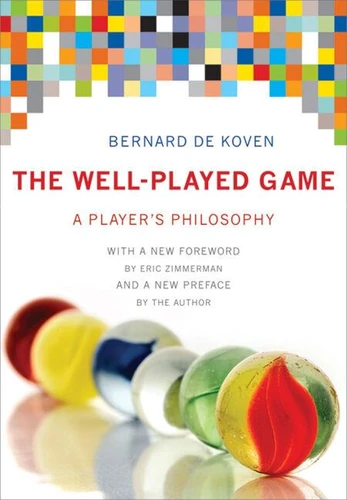
The Well-Played Game: A Player's Philosophy
Par :Formats :
Disponible dans votre compte client Decitre ou Furet du Nord dès validation de votre commande. Le format ePub protégé est :
- Compatible avec une lecture sur My Vivlio (smartphone, tablette, ordinateur)
- Compatible avec une lecture sur liseuses Vivlio
- Pour les liseuses autres que Vivlio, vous devez utiliser le logiciel Adobe Digital Edition. Non compatible avec la lecture sur les liseuses Kindle, Remarkable et Sony
- Non compatible avec un achat hors France métropolitaine
 , qui est-ce ?
Notre partenaire de plateforme de lecture numérique où vous retrouverez l'ensemble de vos ebooks gratuitement
Pour en savoir plus sur nos ebooks, consultez notre aide en ligne ici
C'est si simple ! Lisez votre ebook avec l'app Vivlio sur votre tablette, mobile ou ordinateur :

- Nombre de pages172
- FormatePub
- ISBN978-0-262-31681-1
- EAN9780262316811
- Date de parution23/08/2013
- Protection num.Adobe DRM
- Taille737 Ko
- Infos supplémentairesepub
- ÉditeurThe MIT Press
Résumé
The return of the classic book on games and play that illuminates the relationship between the well-played game and the well-lived life. In The Well-Played Game, games guru Bernard De Koven explores the interaction of play and games, offering players-as well as game designers, educators, and scholars-a guide to how games work. De Koven's classic treatise on how human beings play together, first published in 1978, investigates many issues newly resonant in the era of video and computer games, including social gameplay and player modification.
The digital game industry, now moving beyond its emphasis on graphic techniques to focus on player interaction, has much to learn from The Well-Played Game. De Koven explains that when players congratulate each other on a "well-played" game, they are expressing a unique and profound synthesis that combines the concepts of play (with its associations of playfulness and fun) and game (with its associations of rule-following).
This, he tells us, yields a larger concept: the experience and expression of excellence. De Koven-affectionately and appreciatively hailed by Eric Zimmerman as "our shaman of play"-explores the experience of a well-played game, how we share it, and how we can experience it again; issues of cheating, fairness, keeping score, changing old games (why not change the rules in pursuit of new ways to play?), and making up new games; playing for keeps; and winning.
His book belongs on the bookshelves of players who want to find a game in which they can play well, who are looking for others with whom they can play well, and who have discovered the relationship between the well-played game and the well-lived life.
The digital game industry, now moving beyond its emphasis on graphic techniques to focus on player interaction, has much to learn from The Well-Played Game. De Koven explains that when players congratulate each other on a "well-played" game, they are expressing a unique and profound synthesis that combines the concepts of play (with its associations of playfulness and fun) and game (with its associations of rule-following).
This, he tells us, yields a larger concept: the experience and expression of excellence. De Koven-affectionately and appreciatively hailed by Eric Zimmerman as "our shaman of play"-explores the experience of a well-played game, how we share it, and how we can experience it again; issues of cheating, fairness, keeping score, changing old games (why not change the rules in pursuit of new ways to play?), and making up new games; playing for keeps; and winning.
His book belongs on the bookshelves of players who want to find a game in which they can play well, who are looking for others with whom they can play well, and who have discovered the relationship between the well-played game and the well-lived life.