
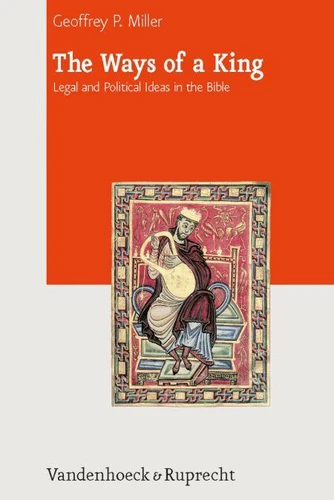
Geoffrey P. Miller, J. D. is Stuyvesant Comfort Professor of Law at the New York University Law School.
The Ways of a King. Legal and Political Ideas in the Bible
Par :Formats :
Disponible dans votre compte client Decitre ou Furet du Nord dès validation de votre commande. Le format PDF est :
- Compatible avec une lecture sur My Vivlio (smartphone, tablette, ordinateur)
- Compatible avec une lecture sur liseuses Vivlio
- Pour les liseuses autres que Vivlio, vous devez utiliser le logiciel Adobe Digital Edition. Non compatible avec la lecture sur les liseuses Kindle, Remarkable et Sony
 , qui est-ce ?
Notre partenaire de plateforme de lecture numérique où vous retrouverez l'ensemble de vos ebooks gratuitement
Pour en savoir plus sur nos ebooks, consultez notre aide en ligne ici
C'est si simple ! Lisez votre ebook avec l'app Vivlio sur votre tablette, mobile ou ordinateur :

- Nombre de pages296
- FormatPDF
- ISBN978-3-647-55034-3
- EAN9783647550343
- Date de parution16/11/2011
- Protection num.pas de protection
- Taille1 Mo
- Infos supplémentairespdf
- ÉditeurVandenhoeck & Ruprecht
Résumé
Geoffrey P. Miller argues that the narratives from Genesis to Second Kings present a sophisticated argument for political obligation and for limited monarchy as the best form of government. The Hebrew Bible, in this sense, can be considered as one of the earliest political philosopies of the western world. The Garden of Eden story identifies revelation, consent, utopia, natural law, ownership, power, patriarchy, and justice as bases for political obligation.
The stories of life after the expulsion from Eden argue that government and law are essential for a decent life. The Genesis narratives recognize patriarchal authority but also identifies limits based on kinship, higher authority and power. The book of Exodus introduces the topic of political authority, arguing that nationhood strictly dominates over other forms of political organization. The Sinai narratives explore two important sources of authority: revelation and consent of the governed.
The book of Joshua presents a theory of sovereignty conceived of as the exclusive and absolute control over territory. The book of Judges examines two types of national government: military rule and confederacy. It argues that military rule is inappropriate for peacetime conditions and that the confederate form is not strong enough to deliver the benefits of nationhood. The books of Samuel and Kings consider theocracy and monarchy.
The bible endorses monarchy as the best available form of government provided that the king is constrained by appropriate checks and balances. Contrary to the view of some scholars, no text from Genesis to Second Kings disapproves of monarchy as a form of government.
The stories of life after the expulsion from Eden argue that government and law are essential for a decent life. The Genesis narratives recognize patriarchal authority but also identifies limits based on kinship, higher authority and power. The book of Exodus introduces the topic of political authority, arguing that nationhood strictly dominates over other forms of political organization. The Sinai narratives explore two important sources of authority: revelation and consent of the governed.
The book of Joshua presents a theory of sovereignty conceived of as the exclusive and absolute control over territory. The book of Judges examines two types of national government: military rule and confederacy. It argues that military rule is inappropriate for peacetime conditions and that the confederate form is not strong enough to deliver the benefits of nationhood. The books of Samuel and Kings consider theocracy and monarchy.
The bible endorses monarchy as the best available form of government provided that the king is constrained by appropriate checks and balances. Contrary to the view of some scholars, no text from Genesis to Second Kings disapproves of monarchy as a form of government.