The Way You See Me is a deeply introspective contemporary bisexual romance in the Difference series, exploring the fragile space between perception and identity, and the emotional consequences of truly seeing another person. Brenda has spent much of her life carefully managing how she is perceived-adjusting herself depending on who is watching, editing her presence into something socially readable and emotionally safe.
Ulan, an observant photographer, moves through the world differently. She does not rush to define people, but she sees patterns others miss-sometimes too clearly, and sometimes too late to unsee them. When Brenda and Ulan begin to spend time together, their connection forms not through certainty, but through interpretation. Ulan's perception of Brenda becomes both a mirror and a pressure. Brenda begins to question whether she is being understood-or quietly constructed through someone else's lens.
Meanwhile, Ulan begins to struggle with the responsibility of seeing too deeply, realizing that understanding someone can also feel like a burden when it risks reducing them into something too fixed. As their relationship develops, a quiet tension grows: between observation and control, between intimacy and definition, between being known and being contained. When Brenda finally chooses vulnerability without performance, and Ulan lets go of the need to "capture" her completely, both are forced to confront a difficult truth-love does not require full understanding, only willingness to remain present without ownership.
At its core, The Way You See Me is about the limits of perception, the danger of emotional framing, and the beauty of allowing another person to remain unfinished. A slow-burn, emotionally grounded romance about two people learning that being seen is not the same as being defined.
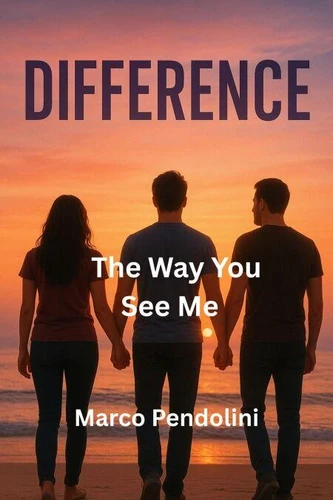
The Way You See Me is a deeply introspective contemporary bisexual romance in the Difference series, exploring the fragile space between perception and identity, and the emotional consequences of truly seeing another person. Brenda has spent much of her life carefully managing how she is perceived-adjusting herself depending on who is watching, editing her presence into something socially readable and emotionally safe.
Ulan, an observant photographer, moves through the world differently. She does not rush to define people, but she sees patterns others miss-sometimes too clearly, and sometimes too late to unsee them. When Brenda and Ulan begin to spend time together, their connection forms not through certainty, but through interpretation. Ulan's perception of Brenda becomes both a mirror and a pressure. Brenda begins to question whether she is being understood-or quietly constructed through someone else's lens.
Meanwhile, Ulan begins to struggle with the responsibility of seeing too deeply, realizing that understanding someone can also feel like a burden when it risks reducing them into something too fixed. As their relationship develops, a quiet tension grows: between observation and control, between intimacy and definition, between being known and being contained. When Brenda finally chooses vulnerability without performance, and Ulan lets go of the need to "capture" her completely, both are forced to confront a difficult truth-love does not require full understanding, only willingness to remain present without ownership.
At its core, The Way You See Me is about the limits of perception, the danger of emotional framing, and the beauty of allowing another person to remain unfinished. A slow-burn, emotionally grounded romance about two people learning that being seen is not the same as being defined.

 , qui est-ce ?