Aatish Taseer was born in 1980. He is the author of Stranger to History: a Son's Journey through Islamic Lands (2009), The Temple-Goers (2010), which was shortlisted for the Costa First Novel Award, and Noon (2011). He lives between London and Delhi.
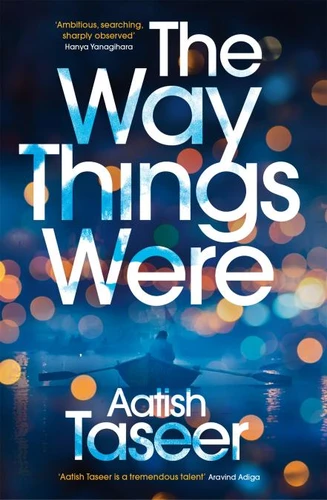
The Way Things Were
Par :Formats :
Disponible dans votre compte client Decitre ou Furet du Nord dès validation de votre commande. Le format ePub protégé est :
- Compatible avec une lecture sur My Vivlio (smartphone, tablette, ordinateur)
- Compatible avec une lecture sur liseuses Vivlio
- Pour les liseuses autres que Vivlio, vous devez utiliser le logiciel Adobe Digital Edition. Non compatible avec la lecture sur les liseuses Kindle, Remarkable et Sony
- Non compatible avec un achat hors France métropolitaine
 , qui est-ce ?
Notre partenaire de plateforme de lecture numérique où vous retrouverez l'ensemble de vos ebooks gratuitement
Pour en savoir plus sur nos ebooks, consultez notre aide en ligne ici
C'est si simple ! Lisez votre ebook avec l'app Vivlio sur votre tablette, mobile ou ordinateur :

- Nombre de pages560
- FormatePub
- ISBN978-1-4472-7273-1
- EAN9781447272731
- Date de parution12/02/2015
- Protection num.Adobe DRM
- Infos supplémentairesepub
- ÉditeurPicador
Résumé
When Skanda's father Toby dies, estranged from Skanda's mother and from the India he once loved, it falls to Skanda to return his body to his birthplace. This is a journey that takes him halfway around the world and deep within three generations of his family, whose fractures, frailties and toxic legacies he has always sought to elude. Both an intimate portrait of a marriage and its aftershocks, and a panoramic vision of India's half-century - in which a rapacious new energy supplants an ineffectual elite - The Way Things Were is an epic novel about the pressures of history upon the present moment.
It is also a meditation on the stories we tell and the stories we forget; their tenderness and violence in forging bonds and in breaking them apart. Set in modern Delhi and at flashpoints from the past four decades, fusing private and political, classical and contemporary to thrilling effect, this book confirms Aatish Taseer as one of the most arresting voices of his generation.
It is also a meditation on the stories we tell and the stories we forget; their tenderness and violence in forging bonds and in breaking them apart. Set in modern Delhi and at flashpoints from the past four decades, fusing private and political, classical and contemporary to thrilling effect, this book confirms Aatish Taseer as one of the most arresting voices of his generation.