
Moses Mutiso is a prolific author renowned for his compelling explorations of human behavior, power dynamics, and the intricate workings of the human psyche. With a keen eye for uncovering the subtle forces that shape our personal and societal interactions, Mutiso's works bridge the gap between psychology, history, and contemporary issues. His writing combines academic rigor with a storytelling style that engages readers across diverse backgrounds, making complex concepts accessible and actionable.
The Water Woman
Par :Formats :
Disponible dans votre compte client Decitre ou Furet du Nord dès validation de votre commande. Le format ePub est :
- Compatible avec une lecture sur My Vivlio (smartphone, tablette, ordinateur)
- Compatible avec une lecture sur liseuses Vivlio
- Pour les liseuses autres que Vivlio, vous devez utiliser le logiciel Adobe Digital Edition. Non compatible avec la lecture sur les liseuses Kindle, Remarkable et Sony
 , qui est-ce ?
Notre partenaire de plateforme de lecture numérique où vous retrouverez l'ensemble de vos ebooks gratuitement
Pour en savoir plus sur nos ebooks, consultez notre aide en ligne ici
C'est si simple ! Lisez votre ebook avec l'app Vivlio sur votre tablette, mobile ou ordinateur :

- FormatePub
- ISBN8231470075
- EAN9798231470075
- Date de parution05/06/2025
- Protection num.pas de protection
- Infos supplémentairesepub
- ÉditeurWalzone Press
Résumé
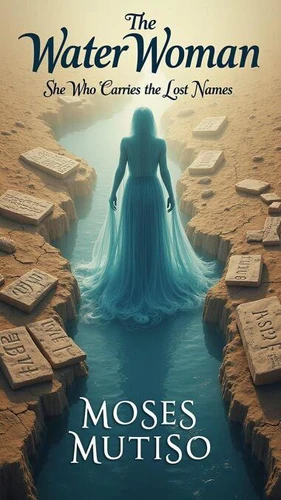
The Water Woman: She Who Carries the Lost NamesIn the drought-stricken village of Mungula, where the river has long fallen silent and secrets run deeper than water, a Nairobi journalist named Amani Njoroge is sent to cover what should be a straightforward story-one of survival, suffering, and climate. But when she arrives, nothing is as expected. The villagers speak of a mysterious figure-Mama Maji, the Water Woman-who appears at dawn, singing to the dry earth and leaving jars of pure water no one can explain.
They say the river remembers. That it holds the names of women who vanished, voices long silenced, and griefs too deep for the written word. Amani is a skeptic-logical, sharp, grounded in facts-but the village has a different rhythm. Here, memory breathes, the past speaks through dreams, and stories demand to be carried. As Amani follows the trail of ancient songs, clay tablets, and a fearless orphan girl named Kito, she finds herself caught between reality and myth, the living and the forgotten.
Her own name begins to shift. Her identity fractures. And she learns that to tell the story of Mungula is not just an act of journalism-it is a ritual of remembering. And remembrance is never without cost. The Water Woman is a haunting, lyrical novel about ancestral memory, spiritual resilience, and the sacred power of naming the lost. Blending magical realism with African folklore and investigative mystery, it is a story of transformation-for a woman, a village, and the voices history tried to erase.
They say the river remembers. That it holds the names of women who vanished, voices long silenced, and griefs too deep for the written word. Amani is a skeptic-logical, sharp, grounded in facts-but the village has a different rhythm. Here, memory breathes, the past speaks through dreams, and stories demand to be carried. As Amani follows the trail of ancient songs, clay tablets, and a fearless orphan girl named Kito, she finds herself caught between reality and myth, the living and the forgotten.
Her own name begins to shift. Her identity fractures. And she learns that to tell the story of Mungula is not just an act of journalism-it is a ritual of remembering. And remembrance is never without cost. The Water Woman is a haunting, lyrical novel about ancestral memory, spiritual resilience, and the sacred power of naming the lost. Blending magical realism with African folklore and investigative mystery, it is a story of transformation-for a woman, a village, and the voices history tried to erase.
A propos de MOSES MUTISO

8,99 €
Shadow Profit
E-book
10,99 €

The Widow of the Throne
E-book
15,99 €

Enslaved by Pleasure
E-book
15,99 €

The Fasting Fix
E-book
10,99 €

The Shadow Cure
E-book
10,99 €

I Was Born to Break It
E-book
10,99 €

The Langley Protocol
E-book
8,99 €
The Myth of Hustle
E-book
10,99 €

Aero Shard Rebellion
E-book
11,99 €
Generational Courage
E-book
12,99 €
8,99 €
The Composer’s Code
E-book
8,99 €
The Soul You Left Behind
E-book
10,99 €

The Light We Buried
E-book
10,99 €

15,99 €

15,99 €
The Echo Codes
E-book
12,99 €
The Maskmaker’s Daughter
E-book
7,49 €