SOLDES
Jusqu'à -70% sur une sélection d'articles*

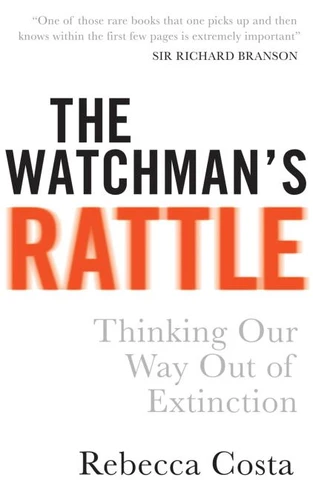
The Watchman's Rattle. Thinking our Way out of Extinction
Par :Formats :
Disponible dans votre compte client Decitre ou Furet du Nord dès validation de votre commande. Le format ePub protégé est :
- Compatible avec une lecture sur My Vivlio (smartphone, tablette, ordinateur)
- Compatible avec une lecture sur liseuses Vivlio
- Pour les liseuses autres que Vivlio, vous devez utiliser le logiciel Adobe Digital Edition. Non compatible avec la lecture sur les liseuses Kindle, Remarkable et Sony
- Non compatible avec un achat hors France métropolitaine
 , qui est-ce ?
Notre partenaire de plateforme de lecture numérique où vous retrouverez l'ensemble de vos ebooks gratuitement
Pour en savoir plus sur nos ebooks, consultez notre aide en ligne ici
C'est si simple ! Lisez votre ebook avec l'app Vivlio sur votre tablette, mobile ou ordinateur :

- Nombre de pages352
- FormatePub
- ISBN978-1-4481-3175-4
- EAN9781448131754
- Date de parution29/02/2012
- Protection num.Adobe DRM
- Infos supplémentairesepub
- ÉditeurVirgin Digital
Résumé
Why does it feel as if our most challenging problems today- the worldwide recession, global warming, fast-spreading viruses, terrorism and poverty- aren't getting solved? What if our brain has limits that prevent it from solving such complex problems? If ancient civilisations collapsed because they, too, hit a cognitive limitation, are we headed for a similar collapse, and if so, can it be prevented?Using historical and modern-day examples, The Watchman's Rattle describes the cognitive gridlock that sets in when complexity races ahead of the brain's ability to manage it.
Beginning with the Mayans, Khmer and Roman Empires, Costa shows how the tendency to find a quick fix to problems by focusing on symptoms instead of searching for permanent solutions, leads to frightening long-term consequences: Society's ability to solve its most challenging, intractable problems becomes gridlocked, progress slows and collapse ensues. But, as Costa reveals, there is a growing body of scientific evidence that the human brain can be retrained to comprehend, analyse and resolve massively complex problems.
A process of intuitive thinking, which Neuroscientists refer to as 'insight'. Part history, part social science, part biology, The Watchman's Rattle is sure to provoke, engage and incite change.
Beginning with the Mayans, Khmer and Roman Empires, Costa shows how the tendency to find a quick fix to problems by focusing on symptoms instead of searching for permanent solutions, leads to frightening long-term consequences: Society's ability to solve its most challenging, intractable problems becomes gridlocked, progress slows and collapse ensues. But, as Costa reveals, there is a growing body of scientific evidence that the human brain can be retrained to comprehend, analyse and resolve massively complex problems.
A process of intuitive thinking, which Neuroscientists refer to as 'insight'. Part history, part social science, part biology, The Watchman's Rattle is sure to provoke, engage and incite change.