SOLDES
Jusqu'à -70% sur une sélection d'articles*

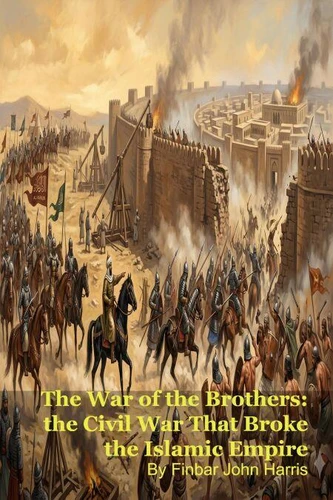
The War of the Brothers: the Civil War That Broke the Islamic Empire
Par :Formats :
Disponible dans votre compte client Decitre ou Furet du Nord dès validation de votre commande. Le format ePub est :
- Compatible avec une lecture sur My Vivlio (smartphone, tablette, ordinateur)
- Compatible avec une lecture sur liseuses Vivlio
- Pour les liseuses autres que Vivlio, vous devez utiliser le logiciel Adobe Digital Edition. Non compatible avec la lecture sur les liseuses Kindle, Remarkable et Sony
 , qui est-ce ?
Notre partenaire de plateforme de lecture numérique où vous retrouverez l'ensemble de vos ebooks gratuitement
Pour en savoir plus sur nos ebooks, consultez notre aide en ligne ici
C'est si simple ! Lisez votre ebook avec l'app Vivlio sur votre tablette, mobile ou ordinateur :

- FormatePub
- ISBN8235101852
- EAN9798235101852
- Date de parution02/05/2026
- Protection num.pas de protection
- Infos supplémentairesepub
- ÉditeurIoakim Ioakim
Résumé
The War of the Brothers: the Civil War That Broke the Islamic Empire In 811 CE, the armies of the Abbasid Caliphate marched east to crush a provincial rebellion. By 813, the greatest city in the medieval world was in flames, a caliph lay dead in the Tigris, and an empire that had seemed eternal was discovering the true dimensions of its own fragility. The Fourth Fitna, the civil war between the brothers al-Amin and al-Ma'mun, sons of the legendary Harun al-Rashid, was not simply a succession dispute.
It was the violent expression of contradictions that had been building since the dynasty's revolutionary founding in 750 CE: between Arab and Persian, between the military aristocracy of Baghdad and the provincial elites of Khurasan, between the world the caliphate had built and the world it was becoming. Hegemonic Fragmentation traces this crisis from its structural origins through the war's devastating military campaigns, the collapse of Baghdad, and the turbulent six-year interregnum that followed.
It follows the commanders, caliphs, viziers, and ordinary fighters whose decisions shaped the outcome, and asks what the catastrophe ultimately produced: the dissolution of an imperial military class, the rise of regional dynasties, a permanent settlement between caliphal and scholarly authority, and, paradoxically, the intellectual golden age that the crisis made possible. This is the story of an empire that destroyed itself and, in doing so, transformed the world.
It was the violent expression of contradictions that had been building since the dynasty's revolutionary founding in 750 CE: between Arab and Persian, between the military aristocracy of Baghdad and the provincial elites of Khurasan, between the world the caliphate had built and the world it was becoming. Hegemonic Fragmentation traces this crisis from its structural origins through the war's devastating military campaigns, the collapse of Baghdad, and the turbulent six-year interregnum that followed.
It follows the commanders, caliphs, viziers, and ordinary fighters whose decisions shaped the outcome, and asks what the catastrophe ultimately produced: the dissolution of an imperial military class, the rise of regional dynasties, a permanent settlement between caliphal and scholarly authority, and, paradoxically, the intellectual golden age that the crisis made possible. This is the story of an empire that destroyed itself and, in doing so, transformed the world.