
Eric Strikwerda teaches Canadian history at the University of Alberta and labour studies/industrial relations at Athabasca University.
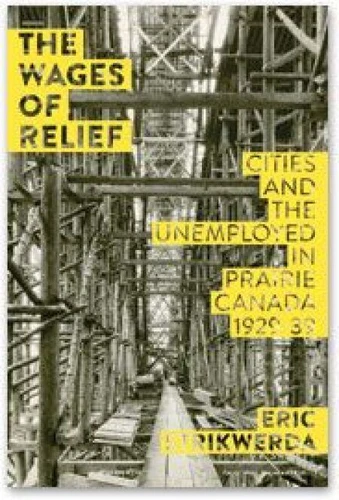
The Wages of Relief. Cities and the Unemployed in Prairie Canada, 1929–39
Par :Formats :
Disponible dans votre compte client Decitre ou Furet du Nord dès validation de votre commande. Le format ePub est :
- Compatible avec une lecture sur My Vivlio (smartphone, tablette, ordinateur)
- Compatible avec une lecture sur liseuses Vivlio
- Pour les liseuses autres que Vivlio, vous devez utiliser le logiciel Adobe Digital Edition. Non compatible avec la lecture sur les liseuses Kindle, Remarkable et Sony
 , qui est-ce ?
Notre partenaire de plateforme de lecture numérique où vous retrouverez l'ensemble de vos ebooks gratuitement
Pour en savoir plus sur nos ebooks, consultez notre aide en ligne ici
C'est si simple ! Lisez votre ebook avec l'app Vivlio sur votre tablette, mobile ou ordinateur :

- Nombre de pages333
- FormatePub
- ISBN978-1-927356-07-4
- EAN9781927356074
- Date de parution01/05/2013
- Protection num.Digital Watermarking
- Taille4 Mo
- Infos supplémentairesepub
- ÉditeurAU Press and CCLH
Résumé
In the early part of the Dirty Thirties, the Canadian prairie city was a relatively safe haven. Having faced recession before the Great War and then again in the early 1920s, municipalities already had relief apparatuses in place to deal with poverty and unemployment. Until 1933, responsibilty for the care of the urban poor remained with local governments, but when the farms failed that year, and the Depression deepened, western Canadian cities suffered tremendously.
Recognizing the severity of the crisis, the national government intervened. Evolving federal programs and policies took over responsibility for the delivery of relief to the single unemployed, while the government simultaneously withdrew financing for all public works projects. Setting municipal relief administrations of the 1930s within a wider literature on welfare and urban poor relief, Strikwerda highlights the legacy on which relief policymakers relied in determining policy directions, as well as the experiences of the individuals and families who depended on relief for their survival.
Focusing on three prairie cities-Edmonton, Saskatoon, and Winnipeg-Strikwerda argues that municipal officials used their power to set policy to address what they perceived to be the most serious threats to the social order stemming from the economic crisis. By analyzing the differing ways in which local relief programs treated married and single men, he also explores important gendered dynamics at work in the response of city administrators to the social and economic upheaval of the Depression.
Probing the mindset of local elites struggling in extraordinary circumstances, The Wages of Relief describes the enduring impact of the policy changes made in the 1930s in the direction of a broad, national approach to unemployment-an approach that ushered in Canada's modern welfare system.
Recognizing the severity of the crisis, the national government intervened. Evolving federal programs and policies took over responsibility for the delivery of relief to the single unemployed, while the government simultaneously withdrew financing for all public works projects. Setting municipal relief administrations of the 1930s within a wider literature on welfare and urban poor relief, Strikwerda highlights the legacy on which relief policymakers relied in determining policy directions, as well as the experiences of the individuals and families who depended on relief for their survival.
Focusing on three prairie cities-Edmonton, Saskatoon, and Winnipeg-Strikwerda argues that municipal officials used their power to set policy to address what they perceived to be the most serious threats to the social order stemming from the economic crisis. By analyzing the differing ways in which local relief programs treated married and single men, he also explores important gendered dynamics at work in the response of city administrators to the social and economic upheaval of the Depression.
Probing the mindset of local elites struggling in extraordinary circumstances, The Wages of Relief describes the enduring impact of the policy changes made in the 1930s in the direction of a broad, national approach to unemployment-an approach that ushered in Canada's modern welfare system.