
Nouveauté
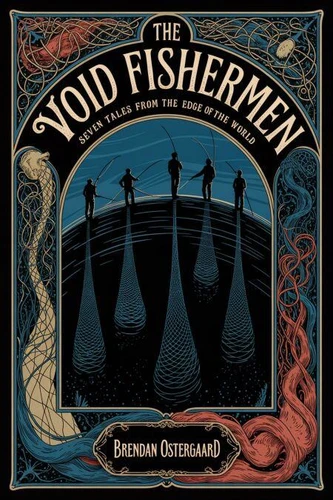
The Void Fishermen. Seven Tales from the Edge of the World
Par :Formats :
Disponible dans votre compte client Decitre ou Furet du Nord dès validation de votre commande. Le format ePub est :
- Compatible avec une lecture sur My Vivlio (smartphone, tablette, ordinateur)
- Compatible avec une lecture sur liseuses Vivlio
- Pour les liseuses autres que Vivlio, vous devez utiliser le logiciel Adobe Digital Edition. Non compatible avec la lecture sur les liseuses Kindle, Remarkable et Sony
 , qui est-ce ?
Notre partenaire de plateforme de lecture numérique où vous retrouverez l'ensemble de vos ebooks gratuitement
Pour en savoir plus sur nos ebooks, consultez notre aide en ligne ici
C'est si simple ! Lisez votre ebook avec l'app Vivlio sur votre tablette, mobile ou ordinateur :

- Nombre de pages143
- FormatePub
- ISBN978-3-565-59874-8
- EAN9783565598748
- Date de parution29/07/2026
- Protection num.pas de protection
- Taille2 Mo
- Infos supplémentairesepub
- ÉditeurEmphaloz Publishing House
Résumé
What lies beyond the edge of the world? In Brendan Ostergaard's haunting debut collection, *The Void Fishermen: Seven Tales from the Edge of the World*, the answer is not a cliff, not an ocean, not a horizon - but a void. An absolute, unfathomable darkness that simply begins where the solid world ends, and which gives up what it chooses to give.
Set in a richly imagined flat-world mythology, these seven interconnected stories follow the inhabitants of remote disc-edge communities who make their living by fishing into nothingness.
Their nets descend into the dark. Strange, dense creatures rise from the middle reaches. Life continues - cautious, ritualistic, and quietly extraordinary. Ostergaard's world-building is precise and immersive, introducing concepts like the Lip, the void-wind, and mid-strata fishing with the understated confidence of a writer who has lived inside this universe for years. But this is not merely a collection of fantastical curiosities.
At its heart, *The Void Fishermen* is a deeply human book about grief, endurance, and the small acts of maintenance that keep a life from unraveling. The opening story alone - following the weathered fisherwoman Maren Svell as she mends her nets before dawn - achieves something remarkable: it makes the metaphysical feel achingly personal. Maren's trembling hands, her dead husband's knot tied three times each morning, her ancient boots re-soled with his old coat - these details accumulate into a portrait of sorrow that is never sentimental, always true. Ostergaard writes with rare economy and precision.
His prose is quiet and deliberate, each sentence carrying weight, each image earning its place. The void itself becomes a character - present, indifferent, and somehow generous in its mystery. For readers who love the intimate strangeness of Ursula K. Le Guin, the atmospheric melancholy of Alistair MacLeod, or the quiet dread of folk horror, this collection will feel like a genuine discovery.
Their nets descend into the dark. Strange, dense creatures rise from the middle reaches. Life continues - cautious, ritualistic, and quietly extraordinary. Ostergaard's world-building is precise and immersive, introducing concepts like the Lip, the void-wind, and mid-strata fishing with the understated confidence of a writer who has lived inside this universe for years. But this is not merely a collection of fantastical curiosities.
At its heart, *The Void Fishermen* is a deeply human book about grief, endurance, and the small acts of maintenance that keep a life from unraveling. The opening story alone - following the weathered fisherwoman Maren Svell as she mends her nets before dawn - achieves something remarkable: it makes the metaphysical feel achingly personal. Maren's trembling hands, her dead husband's knot tied three times each morning, her ancient boots re-soled with his old coat - these details accumulate into a portrait of sorrow that is never sentimental, always true. Ostergaard writes with rare economy and precision.
His prose is quiet and deliberate, each sentence carrying weight, each image earning its place. The void itself becomes a character - present, indifferent, and somehow generous in its mystery. For readers who love the intimate strangeness of Ursula K. Le Guin, the atmospheric melancholy of Alistair MacLeod, or the quiet dread of folk horror, this collection will feel like a genuine discovery.