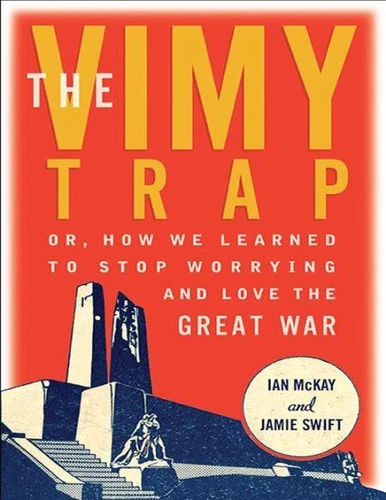
The story of the bloody 1917 Battle of Vimy Ridge is, according to many of today's tellings, a heroic founding moment for Canada. This noble, birth-of-a-nation narrative is regularly applied to the Great War in general. Yet this mythical tale is rather new. "Vimyism"- today's official story of glorious, martial patriotism-contrasts sharply with the complex ways in which veterans, artists, clerics, and even politicians who had supported the war interpreted its meaning over the decades.
Was the Great War a futile imperial debacle? A proud, nation-building milestone? Contending Great War memories have helped to shape how later wars were imagined. The Vimy Trap provides a powerful probe of commemoration cultures. This subtle, fast-paced work of public history-combining scholarly insight with sharp-eyed journalism, and based on primary sources and school textbooks, battlefield visits and war art-explains both how and why peace and war remain contested terrain in ever-changing landscapes of Canadian memory.
The story of the bloody 1917 Battle of Vimy Ridge is, according to many of today's tellings, a heroic founding moment for Canada. This noble, birth-of-a-nation narrative is regularly applied to the Great War in general. Yet this mythical tale is rather new. "Vimyism"- today's official story of glorious, martial patriotism-contrasts sharply with the complex ways in which veterans, artists, clerics, and even politicians who had supported the war interpreted its meaning over the decades.
Was the Great War a futile imperial debacle? A proud, nation-building milestone? Contending Great War memories have helped to shape how later wars were imagined. The Vimy Trap provides a powerful probe of commemoration cultures. This subtle, fast-paced work of public history-combining scholarly insight with sharp-eyed journalism, and based on primary sources and school textbooks, battlefield visits and war art-explains both how and why peace and war remain contested terrain in ever-changing landscapes of Canadian memory.