SOLDES
Jusqu'à -70% sur une sélection d'articles*

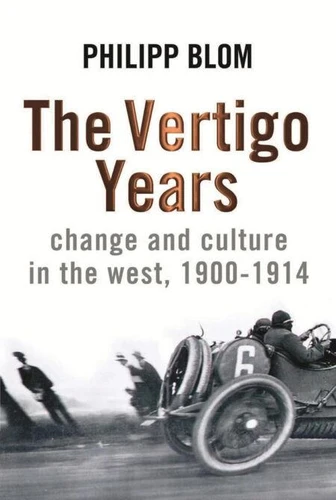
The Vertigo Years. Change And Culture In The West, 1900-1914
Par :Formats :
Disponible dans votre compte client Decitre ou Furet du Nord dès validation de votre commande. Le format ePub protégé est :
- Compatible avec une lecture sur My Vivlio (smartphone, tablette, ordinateur)
- Compatible avec une lecture sur liseuses Vivlio
- Pour les liseuses autres que Vivlio, vous devez utiliser le logiciel Adobe Digital Edition. Non compatible avec la lecture sur les liseuses Kindle, Remarkable et Sony
- Non compatible avec un achat hors France métropolitaine
 , qui est-ce ?
Notre partenaire de plateforme de lecture numérique où vous retrouverez l'ensemble de vos ebooks gratuitement
Pour en savoir plus sur nos ebooks, consultez notre aide en ligne ici
C'est si simple ! Lisez votre ebook avec l'app Vivlio sur votre tablette, mobile ou ordinateur :

- Nombre de pages480
- FormatePub
- ISBN978-0-297-85621-4
- EAN9780297856214
- Date de parution17/10/2012
- Protection num.Adobe DRM
- Infos supplémentairesepub
- ÉditeurWeidenfeld & Nicolson
Résumé
A panorama of Europe, 1900-1914, describing the cultural, economic and political life before the First World War. Europe, early in the twentieth century: a world adrift, a pulsating era of creativity and contradictions. But did this era vanish in the trenches of the Somme, of Ypres, and of Passchendaele? Look closer and the more this world seems like ours: feminism, democratisation, commercial branding, genetics, consumerism and racism, radioactivity and psychoanalysis are all terms first used during this period.
This was a time in which old certainties broke down and many people lost their bearings. At the heart of this vibrant Europe, was a contradiction that would cause its collapse: the new, modern world of mass production, urban life, technological warfare and a rapidly growing working class that was still ruled by men who preferred the image of dashing cavalry officers to the prosaic slaughter of the machine gun, and national mythology to political cohesion and democracy.
The eventual scope of the catastrophe often obscures the fact that the great cultural divide in Europe's history lies before 1914. This book brings to life the immediacy of the lives and issues of this fascinating and flawed period.
This was a time in which old certainties broke down and many people lost their bearings. At the heart of this vibrant Europe, was a contradiction that would cause its collapse: the new, modern world of mass production, urban life, technological warfare and a rapidly growing working class that was still ruled by men who preferred the image of dashing cavalry officers to the prosaic slaughter of the machine gun, and national mythology to political cohesion and democracy.
The eventual scope of the catastrophe often obscures the fact that the great cultural divide in Europe's history lies before 1914. This book brings to life the immediacy of the lives and issues of this fascinating and flawed period.