
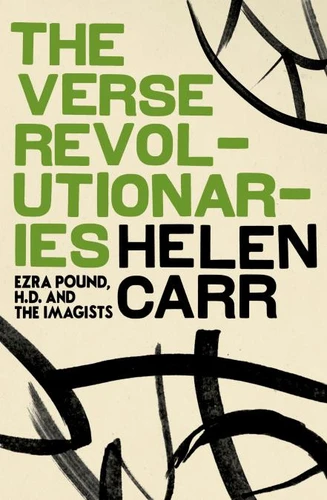
The Verse Revolutionaries. Ezra Pound, H.D. and The Imagists
Par :Formats :
Disponible dans votre compte client Decitre ou Furet du Nord dès validation de votre commande. Le format ePub protégé est :
- Compatible avec une lecture sur My Vivlio (smartphone, tablette, ordinateur)
- Compatible avec une lecture sur liseuses Vivlio
- Pour les liseuses autres que Vivlio, vous devez utiliser le logiciel Adobe Digital Edition. Non compatible avec la lecture sur les liseuses Kindle, Remarkable et Sony
- Non compatible avec un achat hors France métropolitaine
 , qui est-ce ?
Notre partenaire de plateforme de lecture numérique où vous retrouverez l'ensemble de vos ebooks gratuitement
Pour en savoir plus sur nos ebooks, consultez notre aide en ligne ici
C'est si simple ! Lisez votre ebook avec l'app Vivlio sur votre tablette, mobile ou ordinateur :

- Nombre de pages976
- FormatePub
- ISBN978-1-4464-3476-5
- EAN9781446434765
- Date de parution31/03/2013
- Protection num.Adobe DRM
- Infos supplémentairesepub
- ÉditeurVintage Digital
Résumé
The Verse Revolutionaries tells the story of the Imagists, a turbulent and colourful group of poets, who came together in London in the years before the First World War. As T. S. Eliot was to say, appropriately re-invoking the Imagist habit of turning anything they admired into French, the imagist movement was modern poetry's point de repère, the landmark venture that inaugurated Anglo-American literary modernism.
A disparate, stormy group, who had dispersed before the twenties began, these 'verse revolutionaries' received both abuse and acclaim, but their poetry, fragmented, pared-down, elliptical yet direct, exerted a powerful influence on modernist writers, and contributed vitally to the transformation of American and British cultural life in those crucial years. Among those involved were the Americans Ezra Pound, H.
D., William Carlos Williams, Amy Lowell and John Gould Fletcher, and the British T. E. Hulme, F. S. Flint, Richard Aldington and D. H. Lawrence. On the edges of the story are figures such as W. B. Yeats, Ford Madox Ford, Wyndham Lewis and T. S. Eliot. They came from very different class backgrounds, a heterogeneous mélange then only possible in a great metropolis like London. The Verse Revolutionaries traces the passionate interactions, love affairs and bitter quarrels of these aspiring poets from 1905 to 1917.
Helen Carr unpicks the story of how they came together, what they gained from each other in the heady excitement of those early days, and what were the fissures that eventually broke up the movement and their friendships in the dark days of the Great War. Her compelling account challenges the conventional view of Imagism, and offers an acute analysis of the poetry, of the psychology of the individuals involved, and of the evolution and emergence of a transformative cultural movement.
A disparate, stormy group, who had dispersed before the twenties began, these 'verse revolutionaries' received both abuse and acclaim, but their poetry, fragmented, pared-down, elliptical yet direct, exerted a powerful influence on modernist writers, and contributed vitally to the transformation of American and British cultural life in those crucial years. Among those involved were the Americans Ezra Pound, H.
D., William Carlos Williams, Amy Lowell and John Gould Fletcher, and the British T. E. Hulme, F. S. Flint, Richard Aldington and D. H. Lawrence. On the edges of the story are figures such as W. B. Yeats, Ford Madox Ford, Wyndham Lewis and T. S. Eliot. They came from very different class backgrounds, a heterogeneous mélange then only possible in a great metropolis like London. The Verse Revolutionaries traces the passionate interactions, love affairs and bitter quarrels of these aspiring poets from 1905 to 1917.
Helen Carr unpicks the story of how they came together, what they gained from each other in the heady excitement of those early days, and what were the fissures that eventually broke up the movement and their friendships in the dark days of the Great War. Her compelling account challenges the conventional view of Imagism, and offers an acute analysis of the poetry, of the psychology of the individuals involved, and of the evolution and emergence of a transformative cultural movement.
A propos de Helen Carr
What Is History, Now?
E-book
4,49 €