SOLDES
Jusqu'à -70% sur une sélection d'articles*

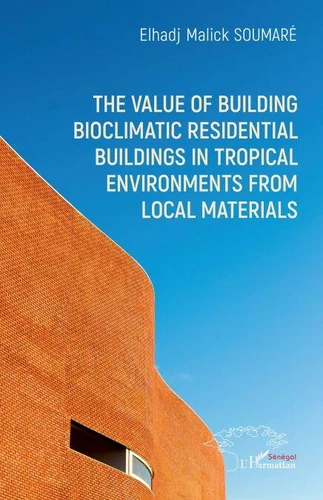
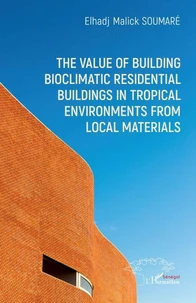
The value of building bioclimatic residential buildings in tropical environments from local materials
Par :Formats :
Disponible dans votre compte client Decitre ou Furet du Nord dès validation de votre commande. Le format ePub est :
- Compatible avec une lecture sur My Vivlio (smartphone, tablette, ordinateur)
- Compatible avec une lecture sur liseuses Vivlio
- Pour les liseuses autres que Vivlio, vous devez utiliser le logiciel Adobe Digital Edition. Non compatible avec la lecture sur les liseuses Kindle, Remarkable et Sony
 , qui est-ce ?
Notre partenaire de plateforme de lecture numérique où vous retrouverez l'ensemble de vos ebooks gratuitement
Pour en savoir plus sur nos ebooks, consultez notre aide en ligne ici
C'est si simple ! Lisez votre ebook avec l'app Vivlio sur votre tablette, mobile ou ordinateur :

- Nombre de pages390
- FormatePub
- ISBN978-2-336-42620-4
- EAN9782336426204
- Date de parution02/05/2024
- Protection num.Digital Watermarking
- Taille15 Mo
- Infos supplémentairesepub
- ÉditeurHarmattan Sénégal
Résumé
This book, aimed at Engineers, Architects, Building Technicians, and Students, offers a crucial insight into bioclimatic building construction in Tropical Africa. It addresses the common oversight of climatic characteristics in building design, emphasizing the need to consider weather conditions, especially in warm periods. The book analyzes current housing, compares it with vernacular and colonial models, and proposes bioclimatic designs using passive architectural techniques.
A key model involves a mathematical analysis of complex admittances, considering local materials like hollow blocks, BTCS, terracotta bricks, laterite stones, granite rubble, and vibrated mortar tiles. Combined with passive techniques, this forms a bioclimatic building model tailored to dry tropical climates. The author, in accessible language, advocates for promoting locally available materials as alternatives to conventional ones, anticipating potential shortages in building aggregates in tropical African countries.
A key model involves a mathematical analysis of complex admittances, considering local materials like hollow blocks, BTCS, terracotta bricks, laterite stones, granite rubble, and vibrated mortar tiles. Combined with passive techniques, this forms a bioclimatic building model tailored to dry tropical climates. The author, in accessible language, advocates for promoting locally available materials as alternatives to conventional ones, anticipating potential shortages in building aggregates in tropical African countries.
A propos de Elhadj Malick Soumaré
18,99 €