SOLDES
Jusqu'à -70% sur une sélection d'articles*

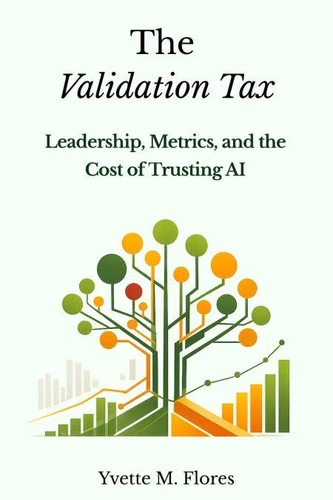
The Validation Tax
Par :Formats :
Disponible dans votre compte client Decitre ou Furet du Nord dès validation de votre commande. Le format ePub est :
- Compatible avec une lecture sur My Vivlio (smartphone, tablette, ordinateur)
- Compatible avec une lecture sur liseuses Vivlio
- Pour les liseuses autres que Vivlio, vous devez utiliser le logiciel Adobe Digital Edition. Non compatible avec la lecture sur les liseuses Kindle, Remarkable et Sony
 , qui est-ce ?
Notre partenaire de plateforme de lecture numérique où vous retrouverez l'ensemble de vos ebooks gratuitement
Pour en savoir plus sur nos ebooks, consultez notre aide en ligne ici
C'est si simple ! Lisez votre ebook avec l'app Vivlio sur votre tablette, mobile ou ordinateur :

- FormatePub
- ISBN8995120803
- EAN9798995120803
- Date de parution13/03/2026
- Protection num.pas de protection
- Infos supplémentairesepub
- ÉditeurA PRECISER
Résumé
Revenue operations professionals are being asked to move faster, report more, and make sense of increasingly complex data environments. AI tools promise to help. But when the algorithm says your pipeline is healthy or your win rate is slipping, do you actually know if it's right?Most don't. And that gap has a cost. The Validation Tax is a diagnostic reference guide for revenue operations professionals, sales leaders, and anyone responsible for interpreting metrics and making business decisions in AI-augmented environments.
It covers 58 metrics across nine chapters, organized around the 4R Framework: Repeatable, Reliable, Reportable, and Revenue Generating. These are not categories. They are conditions. Four things that must exist in your revenue operations before growth stops feeling fragile and starts feeling structural. This book teaches you how to read a metric, not just report it. How to know when a number is telling you the truth.
How to identify what is actually governing your revenue flow versus what is simply generating noise. And how to build the diagnostic literacy that separates operators who lead from those who simply present. As AI becomes embedded in forecasting, pipeline analysis, and revenue reporting, the ability to validate outputs is no longer optional. Stanford research found that even purpose-built AI tools hallucinate between 17 and 33 percent of the time.
Workday's 2026 global study found that nearly 40 percent of AI time savings are lost to rework. The validation burden is real, measurable, and growing. This guide exists because the people who will thrive in AI-augmented environments are the ones who know whether to trust an insight, challenge it, or dig deeper. Everyone else will pass along confident-sounding analysis that falls apart under scrutiny.
You don't need to memorize every metric in this book. You need to understand the logic behind them.
It covers 58 metrics across nine chapters, organized around the 4R Framework: Repeatable, Reliable, Reportable, and Revenue Generating. These are not categories. They are conditions. Four things that must exist in your revenue operations before growth stops feeling fragile and starts feeling structural. This book teaches you how to read a metric, not just report it. How to know when a number is telling you the truth.
How to identify what is actually governing your revenue flow versus what is simply generating noise. And how to build the diagnostic literacy that separates operators who lead from those who simply present. As AI becomes embedded in forecasting, pipeline analysis, and revenue reporting, the ability to validate outputs is no longer optional. Stanford research found that even purpose-built AI tools hallucinate between 17 and 33 percent of the time.
Workday's 2026 global study found that nearly 40 percent of AI time savings are lost to rework. The validation burden is real, measurable, and growing. This guide exists because the people who will thrive in AI-augmented environments are the ones who know whether to trust an insight, challenge it, or dig deeper. Everyone else will pass along confident-sounding analysis that falls apart under scrutiny.
You don't need to memorize every metric in this book. You need to understand the logic behind them.