SOLDES
Jusqu'à -70% sur une sélection d'articles*

Nouveauté
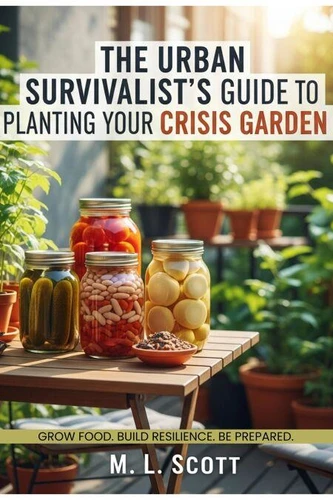
The Urban Survivalist's Guide to Planting Your Crisis Garden
Par :Formats :
Disponible dans votre compte client Decitre ou Furet du Nord dès validation de votre commande. Le format ePub est :
- Compatible avec une lecture sur My Vivlio (smartphone, tablette, ordinateur)
- Compatible avec une lecture sur liseuses Vivlio
- Pour les liseuses autres que Vivlio, vous devez utiliser le logiciel Adobe Digital Edition. Non compatible avec la lecture sur les liseuses Kindle, Remarkable et Sony
 , qui est-ce ?
Notre partenaire de plateforme de lecture numérique où vous retrouverez l'ensemble de vos ebooks gratuitement
Pour en savoir plus sur nos ebooks, consultez notre aide en ligne ici
C'est si simple ! Lisez votre ebook avec l'app Vivlio sur votre tablette, mobile ou ordinateur :

- FormatePub
- ISBN8235127746
- EAN9798235127746
- Date de parution06/06/2026
- Protection num.pas de protection
- Infos supplémentairesepub
- ÉditeurIoakim Ioakim
Résumé
The world feels more unstable by the day - shifting trade winds, geopolitical fault lines, energy volatility, and a grocery bill that keeps gradually climbing. Most of us register the unease but stop short of doing anything about it. This book is for everyone who has thought, "Maybe I should grow some of my own food, " and then promptly talked themselves out of it. Written from the perspective of a middle-aged, St.
Louis suburbanite- a proud homeowner who has spent two decades making the most of the modest outdoor space that comes with townhome living - The Urban Survivalist's Guide to Planting Your Crisis Garden is part practical manual, part permission slip. It does not ask you to move to a farm, build a bunker, or identify as a prepper. It asks you to start where you are, with what you have, and to grow something that could actually feed you when the shelves look thin.
The guide opens with an honest accounting of the modern threat landscape - not to terrify but to contextualize. From there it moves through five focused chapters: which crops deliver the most calories and nutrients per square foot; how to garden in containers, grow bags, and hanging pots when a small porch or patio is your only outdoor option; how to bring production indoors using grow lights, hydroponic systems, and a few clever hacks; how to store what you harvest across seven preservation methods; and - for the person who waits until things actually look concerning - a streamlined three-step survival strategy built around the fastest-yielding, most calorie-dense plants available.
Visual garden maps, compatibility charts, a medicinal herb reference, and yield tables throughout ensure the guidance stays grounded and actionable rather than aspirational. The tone throughout is warm, occasionally sardonic, and resolutely non-alarmist. The argument is simple: a crisis garden is not an admission of despair. It is an assertion of agency. You cannot negotiate a trade war or vote away a supply chain failure, but you can grow potatoes.
You can ferment a jar of cabbage. You can put something on the table that no one can take from you. Regardless to what happens out in the world, that capacity belongs entirely to you.
Louis suburbanite- a proud homeowner who has spent two decades making the most of the modest outdoor space that comes with townhome living - The Urban Survivalist's Guide to Planting Your Crisis Garden is part practical manual, part permission slip. It does not ask you to move to a farm, build a bunker, or identify as a prepper. It asks you to start where you are, with what you have, and to grow something that could actually feed you when the shelves look thin.
The guide opens with an honest accounting of the modern threat landscape - not to terrify but to contextualize. From there it moves through five focused chapters: which crops deliver the most calories and nutrients per square foot; how to garden in containers, grow bags, and hanging pots when a small porch or patio is your only outdoor option; how to bring production indoors using grow lights, hydroponic systems, and a few clever hacks; how to store what you harvest across seven preservation methods; and - for the person who waits until things actually look concerning - a streamlined three-step survival strategy built around the fastest-yielding, most calorie-dense plants available.
Visual garden maps, compatibility charts, a medicinal herb reference, and yield tables throughout ensure the guidance stays grounded and actionable rather than aspirational. The tone throughout is warm, occasionally sardonic, and resolutely non-alarmist. The argument is simple: a crisis garden is not an admission of despair. It is an assertion of agency. You cannot negotiate a trade war or vote away a supply chain failure, but you can grow potatoes.
You can ferment a jar of cabbage. You can put something on the table that no one can take from you. Regardless to what happens out in the world, that capacity belongs entirely to you.