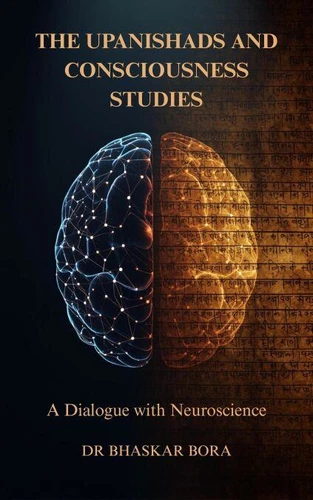
The Upanishads and Consciousness Studies: A Dialogue with Neuroscience
Par :Formats :
Disponible dans votre compte client Decitre ou Furet du Nord dès validation de votre commande. Le format ePub protégé est :
- Compatible avec une lecture sur My Vivlio (smartphone, tablette, ordinateur)
- Compatible avec une lecture sur liseuses Vivlio
- Pour les liseuses autres que Vivlio, vous devez utiliser le logiciel Adobe Digital Edition. Non compatible avec la lecture sur les liseuses Kindle, Remarkable et Sony
- Non compatible avec un achat hors France métropolitaine
 , qui est-ce ?
Notre partenaire de plateforme de lecture numérique où vous retrouverez l'ensemble de vos ebooks gratuitement
Pour en savoir plus sur nos ebooks, consultez notre aide en ligne ici
C'est si simple ! Lisez votre ebook avec l'app Vivlio sur votre tablette, mobile ou ordinateur :

- FormatePub
- ISBN8233549250
- EAN9798233549250
- Date de parution25/02/2026
- Protection num.Adobe DRM
- Infos supplémentairesepub
- ÉditeurLinda Balsamo
Résumé
Consciousness remains the most contested frontier in contemporary thought. Neuroscience maps neural networks with increasing precision. Philosophy of mind debates emergence, physicalism, panpsychism, and the explanatory gap. Yet the central question persists: why does subjective experience exist at all?The Upanishads and Consciousness Studies offers a disciplined philosophical dialogue between modern neuroscience and the ancient non-dual inquiry of the Upanishads.
This work does not collapse scripture into science, nor does it reduce consciousness to neural mechanics. Instead, it clarifies levels of explanation with methodological precision. Drawing from analytic philosophy, cognitive neuroscience, and classical Advaita Vedanta, the book explores:. The Hard Problem of consciousness. Neural correlates versus ontological explanation. Self-model theory and structural misidentification.
Avidya as ontological error. Emergence and fundamentality. The nature of atman and Brahman. Language limits and ineffability. The reflexive challenge of studying awarenessEmpirical findings are treated descriptively. Metaphysical claims are examined critically. Category errors are identified without rhetoric. Written for scholars, philosophers, clinicians, and serious students of consciousness studies, this work offers clarity rather than consolation.
The dialogue remains open.
This work does not collapse scripture into science, nor does it reduce consciousness to neural mechanics. Instead, it clarifies levels of explanation with methodological precision. Drawing from analytic philosophy, cognitive neuroscience, and classical Advaita Vedanta, the book explores:. The Hard Problem of consciousness. Neural correlates versus ontological explanation. Self-model theory and structural misidentification.
Avidya as ontological error. Emergence and fundamentality. The nature of atman and Brahman. Language limits and ineffability. The reflexive challenge of studying awarenessEmpirical findings are treated descriptively. Metaphysical claims are examined critically. Category errors are identified without rhetoric. Written for scholars, philosophers, clinicians, and serious students of consciousness studies, this work offers clarity rather than consolation.
The dialogue remains open.
A propos de Dr Bhaskar Bora





3,49 €




3,49 €

3,49 €



3,49 €