SOLDES
Jusqu'à -70% sur une sélection d'articles*

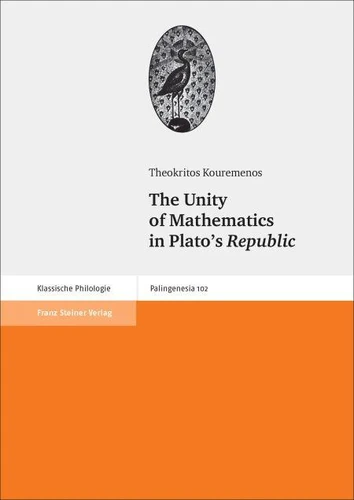
The Unity of Mathematics in Plato's Republic
Par :Formats :
Disponible dans votre compte client Decitre ou Furet du Nord dès validation de votre commande. Le format PDF est :
- Compatible avec une lecture sur My Vivlio (smartphone, tablette, ordinateur)
- Compatible avec une lecture sur liseuses Vivlio
- Pour les liseuses autres que Vivlio, vous devez utiliser le logiciel Adobe Digital Edition. Non compatible avec la lecture sur les liseuses Kindle, Remarkable et Sony
 , qui est-ce ?
Notre partenaire de plateforme de lecture numérique où vous retrouverez l'ensemble de vos ebooks gratuitement
Pour en savoir plus sur nos ebooks, consultez notre aide en ligne ici
C'est si simple ! Lisez votre ebook avec l'app Vivlio sur votre tablette, mobile ou ordinateur :

- Nombre de pages141
- FormatPDF
- ISBN978-3-515-11077-8
- EAN9783515110778
- Date de parution05/04/2016
- Protection num.Digital Watermarking
- Taille8 Mo
- Infos supplémentairespdf
- ÉditeurFranz Steiner
Résumé
In his Republic Plato considers grasping the unity of mathematics as the ultimate goal of the mathematical studies in which the future philosopher-rulers must engage before they turn to philosophy. How the unity of mathematics is supposed to be understood is not explained, however. This e-book argues that Plato conceives of the unity of mathematics in terms of the mutually benefiting links between its branches, just as he conceives of the unity of the state outlined in the Republic in terms of the common benefit for all citizens.
Evidence for this view is provided by a discussion of his conception of astronomy as a propedeutic to philosophy, which can be best understood as hinting at a historically possible link between fourth-century-BC astronomy and solid geometry. The monograph also includes a detailed discussion of two well-known stories about Plato: not only he motivated Greek mathematicians to solve a difficult problem in solid geometry with his interpretation of a Delphic oracle given to the inhabitants of the island of Delos but he also posed the question which led to the development of the astronomical theory of homocentric spheres.
It is argued that these stories are best understood as fictional episodes in Plato's life, constructed from passages in his works.
Evidence for this view is provided by a discussion of his conception of astronomy as a propedeutic to philosophy, which can be best understood as hinting at a historically possible link between fourth-century-BC astronomy and solid geometry. The monograph also includes a detailed discussion of two well-known stories about Plato: not only he motivated Greek mathematicians to solve a difficult problem in solid geometry with his interpretation of a Delphic oracle given to the inhabitants of the island of Delos but he also posed the question which led to the development of the astronomical theory of homocentric spheres.
It is argued that these stories are best understood as fictional episodes in Plato's life, constructed from passages in his works.