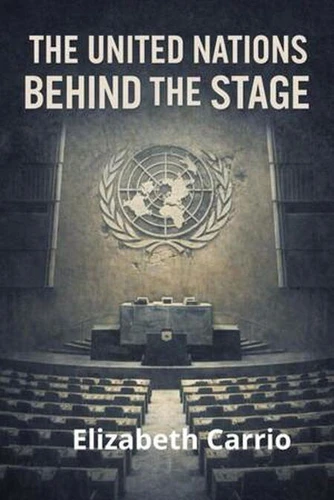
The United Nations Behind the Stage is a rare insider testimony that exposes the hidden mechanisms, structural dysfunctions, and systemic corruption of the United Nations and its affiliated international organizations. Written by a former senior financial officer who served within several UN-related institutions between 1999 and 2003, this book traces a journey from idealism to disillusionment. The author initially joined the United Nations system driven by a sincere desire to contribute to peace, human dignity, and humanitarian action.
What followed was a profound confrontation with an institutional reality radically different from the values publicly promoted by the organization. Through concrete examples drawn from first-hand experience in post-war Kosovo and at the headquarters of an international organization mandated to destroy chemical weapons, the book reveals how international organizations function behind the scenes. Recruitment processes are shown to be driven less by competence than by political bargaining, national interests, and informal networks.
Loyalty to the system is rewarded, while independent thinking and professional integrity are discouraged. At the heart of the analysis lies a fundamental critique of the United Nations' institutional structure. Despite the appearance of democratic governance, real decision-making power is concentrated in the hands of a few states, primarily through the Security Council and the Secretariat. The absence of judicial oversight, meaningful accountability, and representation of civil society creates a system that operates in an authoritarian manner while maintaining a façade of transparency and moral authority.
The author also documents widespread financial mismanagement and corruption. Budgets are often fictitious, internal controls ineffective or nonexistent, and senior managers frequently lack even basic financial literacy. Inflated contracts, conflicts of interest, illicit commissions, and intimidation of whistleblowers are not presented as isolated incidents, but as structural consequences of a system governed by political interests rather than ethical principles.
Beyond institutional critique, the book explores the human cost of this dysfunction: demoralized staff, cultures of fear and silence, psychological breakdowns, and the erosion of meaning among those who once believed they were serving a higher cause. The contrast with the private sector-often caricatured as purely profit-driven-is striking, as the author observes that accountability and respect for competence are frequently stronger outside international public institutions.
The United Nations Behind the Stage is neither an ideological pamphlet nor an abstract political essay. It is a documented, reflective, and deeply personal account that raises uncomfortable questions about global governance, power, and responsibility. By exposing the gap between official discourse and operational reality, the book invites readers to reconsider the role of international organizations in a world facing growing humanitarian and geopolitical crises.
This testimony is essential reading for policymakers, academics, NGO professionals, journalists, and anyone interested in understanding how international institutions truly function-and why meaningful reform remains so elusive.
The United Nations Behind the Stage is a rare insider testimony that exposes the hidden mechanisms, structural dysfunctions, and systemic corruption of the United Nations and its affiliated international organizations. Written by a former senior financial officer who served within several UN-related institutions between 1999 and 2003, this book traces a journey from idealism to disillusionment. The author initially joined the United Nations system driven by a sincere desire to contribute to peace, human dignity, and humanitarian action.
What followed was a profound confrontation with an institutional reality radically different from the values publicly promoted by the organization. Through concrete examples drawn from first-hand experience in post-war Kosovo and at the headquarters of an international organization mandated to destroy chemical weapons, the book reveals how international organizations function behind the scenes. Recruitment processes are shown to be driven less by competence than by political bargaining, national interests, and informal networks.
Loyalty to the system is rewarded, while independent thinking and professional integrity are discouraged. At the heart of the analysis lies a fundamental critique of the United Nations' institutional structure. Despite the appearance of democratic governance, real decision-making power is concentrated in the hands of a few states, primarily through the Security Council and the Secretariat. The absence of judicial oversight, meaningful accountability, and representation of civil society creates a system that operates in an authoritarian manner while maintaining a façade of transparency and moral authority.
The author also documents widespread financial mismanagement and corruption. Budgets are often fictitious, internal controls ineffective or nonexistent, and senior managers frequently lack even basic financial literacy. Inflated contracts, conflicts of interest, illicit commissions, and intimidation of whistleblowers are not presented as isolated incidents, but as structural consequences of a system governed by political interests rather than ethical principles.
Beyond institutional critique, the book explores the human cost of this dysfunction: demoralized staff, cultures of fear and silence, psychological breakdowns, and the erosion of meaning among those who once believed they were serving a higher cause. The contrast with the private sector-often caricatured as purely profit-driven-is striking, as the author observes that accountability and respect for competence are frequently stronger outside international public institutions.
The United Nations Behind the Stage is neither an ideological pamphlet nor an abstract political essay. It is a documented, reflective, and deeply personal account that raises uncomfortable questions about global governance, power, and responsibility. By exposing the gap between official discourse and operational reality, the book invites readers to reconsider the role of international organizations in a world facing growing humanitarian and geopolitical crises.
This testimony is essential reading for policymakers, academics, NGO professionals, journalists, and anyone interested in understanding how international institutions truly function-and why meaningful reform remains so elusive.