SOLDES
Jusqu'à -70% sur une sélection d'articles*

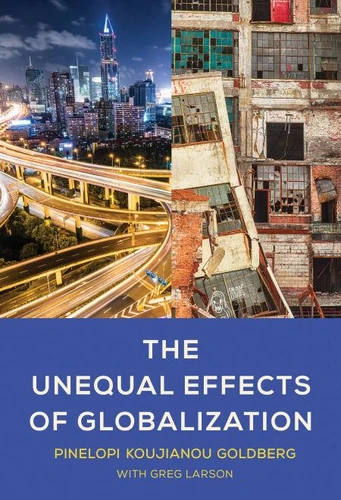
The Unequal Effects of Globalization
Par : ,Formats :
Disponible dans votre compte client Decitre ou Furet du Nord dès validation de votre commande. Le format ePub protégé est :
- Compatible avec une lecture sur My Vivlio (smartphone, tablette, ordinateur)
- Compatible avec une lecture sur liseuses Vivlio
- Pour les liseuses autres que Vivlio, vous devez utiliser le logiciel Adobe Digital Edition. Non compatible avec la lecture sur les liseuses Kindle, Remarkable et Sony
- Non compatible avec un achat hors France métropolitaine
 , qui est-ce ?
Notre partenaire de plateforme de lecture numérique où vous retrouverez l'ensemble de vos ebooks gratuitement
Pour en savoir plus sur nos ebooks, consultez notre aide en ligne ici
C'est si simple ! Lisez votre ebook avec l'app Vivlio sur votre tablette, mobile ou ordinateur :

- Nombre de pages128
- FormatePub
- ISBN978-0-262-37557-3
- EAN9780262375573
- Date de parution15/08/2023
- Protection num.Adobe DRM
- Taille1 Mo
- Infos supplémentairesepub
- ÉditeurThe MIT Press
Résumé
From a former Chief Economist of the World Bank, a brief, balanced, and sobering discussion of globalization trends, their drivers, and effects on inequality. The recent retreat from globalization has been triggered by a perception that increased competition from global trade is not fair and leads to increased inequality within countries. Is this phenomenon a small hiccup in the overall wave of globalization, or are we at the beginning of a new era of deglobalization? Former Chief Economist of the World Bank Group Pinelopi Koujianou Goldberg tells us that the answer depends on the policy choices we make, and in this book The Unequal Effects of Globalization, she calls for exploring alternative policy approaches including place-based policies, while sustaining international cooperation.
At this critical moment of shifting attitudes toward globalization, The Unequal Effects of Globalization enters the debate while also taking a step back. Goldberg investigates globalization's many dimensions, disruptions, and complex interactions, from the late twentieth century's wave of trade liberalizations to the rise of China, the decline of manufacturing in advanced economies, and the recent effects of trade on global poverty, inequality, labor markets, and firm dynamics.
From there, Goldberg explores the significance of the recent backlash against and potential retreat from globalization and considers the key policy implications of these trends and emerging dynamics. As comprehensive as it is well-balanced, The Unequal Effects of Globalization is an essential read on trade and cooperation between nations that will appeal as much to academics and policymakers as it will to general readers who are interested in learning more about this timely subject.
At this critical moment of shifting attitudes toward globalization, The Unequal Effects of Globalization enters the debate while also taking a step back. Goldberg investigates globalization's many dimensions, disruptions, and complex interactions, from the late twentieth century's wave of trade liberalizations to the rise of China, the decline of manufacturing in advanced economies, and the recent effects of trade on global poverty, inequality, labor markets, and firm dynamics.
From there, Goldberg explores the significance of the recent backlash against and potential retreat from globalization and considers the key policy implications of these trends and emerging dynamics. As comprehensive as it is well-balanced, The Unequal Effects of Globalization is an essential read on trade and cooperation between nations that will appeal as much to academics and policymakers as it will to general readers who are interested in learning more about this timely subject.