
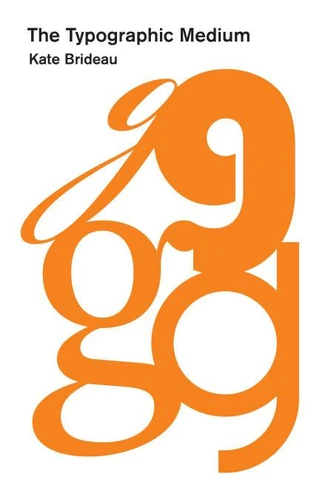
The Typographic Medium
Par :Formats :
Disponible dans votre compte client Decitre ou Furet du Nord dès validation de votre commande. Le format ePub protégé est :
- Compatible avec une lecture sur My Vivlio (smartphone, tablette, ordinateur)
- Compatible avec une lecture sur liseuses Vivlio
- Pour les liseuses autres que Vivlio, vous devez utiliser le logiciel Adobe Digital Edition. Non compatible avec la lecture sur les liseuses Kindle, Remarkable et Sony
- Non compatible avec un achat hors France métropolitaine
 , qui est-ce ?
Notre partenaire de plateforme de lecture numérique où vous retrouverez l'ensemble de vos ebooks gratuitement
Pour en savoir plus sur nos ebooks, consultez notre aide en ligne ici
C'est si simple ! Lisez votre ebook avec l'app Vivlio sur votre tablette, mobile ou ordinateur :

- Nombre de pages304
- FormatePub
- ISBN978-0-262-36562-8
- EAN9780262365628
- Date de parution19/10/2021
- Protection num.Adobe DRM
- Taille4 Mo
- Infos supplémentairesepub
- ÉditeurThe MIT Press
Résumé
An innovative examination of typography as a medium of communication rather than part of print or digital media. Typography is everywhere and yet widely unnoticed. When we read type, we fail to see type. In this book, Kate Brideau considers typography not as part of "print media" or "digital media" but as a medium of communication itself, able to transcend the life and death of particular technologies.
Examining the contradiction between typographic form (often overlooked) and function (often overpowering), Brideau argues that typography is made up not of letters but of shapes, and that shape is existentially and technologically central to the typographic medium. After considering what constitutes typographic form, Brideau turns to typographic function and how it relates to form. Examining typography's role in both the neurological and psychological aspects of reading, she argues that typography's functions exceed reading; typographic forms communicate, but that communication is not limited to the content they carry.
To understand to what extent the design and operations of the typographic medium affect the way we perceive information, Brideau warns, we must understand the medium's own operational logic, embodied in the full diversity of typographic forms. Brideau discusses a range of topics--from intellectual property protection for typefaces to Renaissance and Enlightenment ideal letterforms--and draws on a wide variety of theoretical work, including phenomenological ideas about comprehension, German media archaeology, and the media and communication theories of Vilém Flusser and others.
Hand-drawn illustrations of typographic forms accompany the text.
Examining the contradiction between typographic form (often overlooked) and function (often overpowering), Brideau argues that typography is made up not of letters but of shapes, and that shape is existentially and technologically central to the typographic medium. After considering what constitutes typographic form, Brideau turns to typographic function and how it relates to form. Examining typography's role in both the neurological and psychological aspects of reading, she argues that typography's functions exceed reading; typographic forms communicate, but that communication is not limited to the content they carry.
To understand to what extent the design and operations of the typographic medium affect the way we perceive information, Brideau warns, we must understand the medium's own operational logic, embodied in the full diversity of typographic forms. Brideau discusses a range of topics--from intellectual property protection for typefaces to Renaissance and Enlightenment ideal letterforms--and draws on a wide variety of theoretical work, including phenomenological ideas about comprehension, German media archaeology, and the media and communication theories of Vilém Flusser and others.
Hand-drawn illustrations of typographic forms accompany the text.