SOLDES
Jusqu'à -70% sur une sélection d'articles*

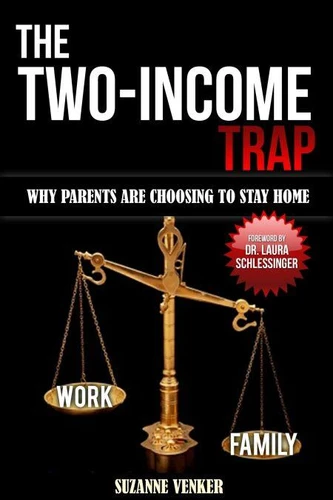
The Two-Income Trap: Why Parents Are Choosing To Stay Home
Par :Formats :
Disponible dans votre compte client Decitre ou Furet du Nord dès validation de votre commande. Le format ePub est :
- Compatible avec une lecture sur My Vivlio (smartphone, tablette, ordinateur)
- Compatible avec une lecture sur liseuses Vivlio
- Pour les liseuses autres que Vivlio, vous devez utiliser le logiciel Adobe Digital Edition. Non compatible avec la lecture sur les liseuses Kindle, Remarkable et Sony
 , qui est-ce ?
Notre partenaire de plateforme de lecture numérique où vous retrouverez l'ensemble de vos ebooks gratuitement
Pour en savoir plus sur nos ebooks, consultez notre aide en ligne ici
C'est si simple ! Lisez votre ebook avec l'app Vivlio sur votre tablette, mobile ou ordinateur :

- FormatePub
- ISBN978-1-61868-884-2
- EAN9781618688842
- Date de parution18/12/2014
- Protection num.pas de protection
- Infos supplémentairesepub
- ÉditeurPOST HILL PRESS
Résumé
For decades feminists have belabored the idea that work should be at the center of women's lives, and that motherhood wouldn't get in the way of this goal if society would simply cooperate. If husbands performed half the housework and childcare, if the government would invest in universal daycare and family leave, and if employers allowed parents to leave the office at 5:00 p.m., women could achieve the balance they so desperately seek.
But the real reasons work-family balance remains elusive are much more complex. In The Two-Income Trap, bestselling author and Fox News contributor Suzanne Venker claims the two-income family is a trap. It encourages Americans to think about family solely in terms of economics, when in fact breadwinning is only part of the equation. The burnout that results from not having someone home to do everything mothers have historically done is huge.
Not only do children lose out, marriages become stressed to the breaking point. Husbands and wives become locked in a battle over who's going to do what on the home front. When that happens, many women view this as a marital problem when in fact the issue is time. There just isn't enough. "The battles [between husbands and wives] aren't always waged over actual chores or the inequity of handling them.
The battle is over time, " writes Rhonda Nordin in After the Baby. At the core of this debate, writes Venker, is the fact that raising a family is no longer valued or even recognized as an enormous undertaking. The needs of children simply don't allow both parents the freedom to dedicate themselves fully to something else. Fortunately, Americans are finally accepting this fact. Not only are more fathers staying home, the share of stay-at-home mothers rose to 29% in 2012, up from a modern-era low of 23% in 1999.
This rise represents a reversal of the long-term decline in this group that had persisted for the last three decades of the 20th century-during which time feminists waved the flag of liberation. But none of it feels liberating. Women are tired of trying to keep up with the demands of full-time work and childrearing. They're tired of trying to prove themselves. The idea that women can 'have it all'-pursue demanding careers, raise fabulous kids and remain perfectly sane along the way-is bogus.
There are only so many hours in a day. The secret to balance, for those who want it, is to accept that a woman's life has seasons: a time for this and a time for that. Women who insist on doing everything at once are proving nothing except an allegiance to a dying movement. The era of "I am woman, hear me roar" is over. Women can have most of what they want over the course of their lives, but not if they follow the cultural script feminists have laid out for them.
Women need to adjust their expectations and accept that when we choose to have children, we choose a life of trade-offs. So do men. We also need to broaden our view of what it means to be successful. Being important in the outside world is great, but it will never compare to the significance of our presence at home, and to the calming nature of that home when someone's physically there. At the end of the day, it's our personal success, not our professional success, that determines how happy we are."Dr.
Laura" praises The Two-Income Trap: "Ms. Venker's contribution to humanity, to families, to marriages, to women is huge. In a way, it is sad that she's got to argue points to prove what ought to be a "given." On the other hand, her arguments are beautifully crafted and right on target for today's anti-childrearing atmosphere. My hope for you, the reader, is that after you read this book, you will be unwavering in your commitment to do the right thing, and reap the incredible rewards."
But the real reasons work-family balance remains elusive are much more complex. In The Two-Income Trap, bestselling author and Fox News contributor Suzanne Venker claims the two-income family is a trap. It encourages Americans to think about family solely in terms of economics, when in fact breadwinning is only part of the equation. The burnout that results from not having someone home to do everything mothers have historically done is huge.
Not only do children lose out, marriages become stressed to the breaking point. Husbands and wives become locked in a battle over who's going to do what on the home front. When that happens, many women view this as a marital problem when in fact the issue is time. There just isn't enough. "The battles [between husbands and wives] aren't always waged over actual chores or the inequity of handling them.
The battle is over time, " writes Rhonda Nordin in After the Baby. At the core of this debate, writes Venker, is the fact that raising a family is no longer valued or even recognized as an enormous undertaking. The needs of children simply don't allow both parents the freedom to dedicate themselves fully to something else. Fortunately, Americans are finally accepting this fact. Not only are more fathers staying home, the share of stay-at-home mothers rose to 29% in 2012, up from a modern-era low of 23% in 1999.
This rise represents a reversal of the long-term decline in this group that had persisted for the last three decades of the 20th century-during which time feminists waved the flag of liberation. But none of it feels liberating. Women are tired of trying to keep up with the demands of full-time work and childrearing. They're tired of trying to prove themselves. The idea that women can 'have it all'-pursue demanding careers, raise fabulous kids and remain perfectly sane along the way-is bogus.
There are only so many hours in a day. The secret to balance, for those who want it, is to accept that a woman's life has seasons: a time for this and a time for that. Women who insist on doing everything at once are proving nothing except an allegiance to a dying movement. The era of "I am woman, hear me roar" is over. Women can have most of what they want over the course of their lives, but not if they follow the cultural script feminists have laid out for them.
Women need to adjust their expectations and accept that when we choose to have children, we choose a life of trade-offs. So do men. We also need to broaden our view of what it means to be successful. Being important in the outside world is great, but it will never compare to the significance of our presence at home, and to the calming nature of that home when someone's physically there. At the end of the day, it's our personal success, not our professional success, that determines how happy we are."Dr.
Laura" praises The Two-Income Trap: "Ms. Venker's contribution to humanity, to families, to marriages, to women is huge. In a way, it is sad that she's got to argue points to prove what ought to be a "given." On the other hand, her arguments are beautifully crafted and right on target for today's anti-childrearing atmosphere. My hope for you, the reader, is that after you read this book, you will be unwavering in your commitment to do the right thing, and reap the incredible rewards."