
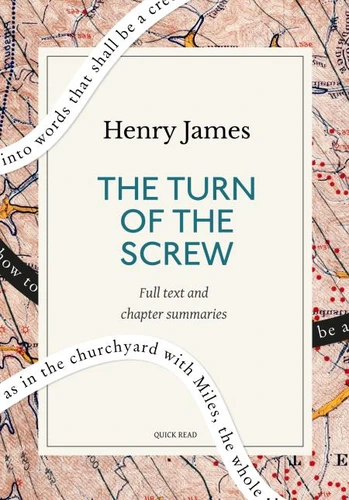
The Turn of the Screw: A Quick Read edition
Par : ,Formats :
Disponible dans votre compte client Decitre ou Furet du Nord dès validation de votre commande. Le format Multi-format est :
- Pour les liseuses autres que Vivlio, vous devez utiliser le logiciel Adobe Digital Edition. Non compatible avec la lecture sur les liseuses Kindle, Remarkable et Sony
 , qui est-ce ?
Notre partenaire de plateforme de lecture numérique où vous retrouverez l'ensemble de vos ebooks gratuitement
Pour en savoir plus sur nos ebooks, consultez notre aide en ligne ici
C'est si simple ! Lisez votre ebook avec l'app Vivlio sur votre tablette, mobile ou ordinateur :

- FormatMulti-format
- ISBN978-2-38582-094-7
- EAN9782385820947
- Date de parution16/02/2024
- Protection num.pas de protection
- Infos supplémentairesMulti-Format
- ÉditeurQuick Read
Résumé
Discover a new way to read classics with Quick Read. This Quick Read edition includes both the full text and a summary for each chapter. - Reading time of the complete text: about 4 hours - Reading time of the summarized text: 16 minutes "The Turn of the Screw" is a horror novella by Henry James, first published in serial format in Collier's Weekly in 1898. The story follows a governess caring for two children at a remote estate who becomes convinced that the grounds are haunted.
The novella is considered a work of both Gothic and horror fiction and has undergone several major transformations in critical analysis since its publication. The novella has been adapted several times, including a Broadway play, a chamber opera, two films, and a miniseries. The novella alludes to Jane Eyre and Ann Radcliffe's Gothic novel The Mysteries of Udolpho. The novella has been subject to various interpretations, including psychoanalytic, Marxist, and feminist approaches.
The story's ambiguity has been a subject of debate among critics, with some suggesting that the supernatural elements were figments of the governess' imagination.
The novella is considered a work of both Gothic and horror fiction and has undergone several major transformations in critical analysis since its publication. The novella has been adapted several times, including a Broadway play, a chamber opera, two films, and a miniseries. The novella alludes to Jane Eyre and Ann Radcliffe's Gothic novel The Mysteries of Udolpho. The novella has been subject to various interpretations, including psychoanalytic, Marxist, and feminist approaches.
The story's ambiguity has been a subject of debate among critics, with some suggesting that the supernatural elements were figments of the governess' imagination.
A propos de Quick Read
4,99 €
4,99 €
4,99 €
4,99 €
4,99 €
4,99 €
4,99 €
4,99 €
4,99 €
4,99 €
4,99 €
4,99 €
4,99 €
4,99 €
4,99 €