SOLDES
Jusqu'à -70% sur une sélection d'articles*

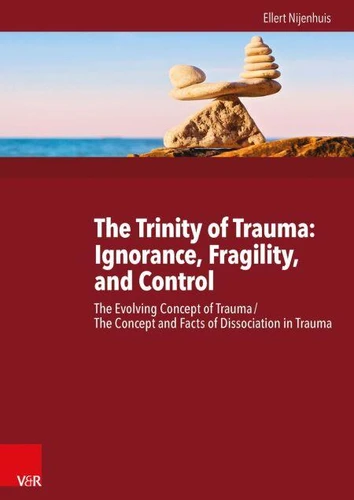
The Trinity of Trauma: Ignorance, Fragility, and Control. The Evolving Concept of Trauma/The Concept and Facts of Dissociation in Trauma
Par : ,Formats :
Disponible dans votre compte client Decitre ou Furet du Nord dès validation de votre commande. Le format PDF est :
- Compatible avec une lecture sur My Vivlio (smartphone, tablette, ordinateur)
- Compatible avec une lecture sur liseuses Vivlio
- Pour les liseuses autres que Vivlio, vous devez utiliser le logiciel Adobe Digital Edition. Non compatible avec la lecture sur les liseuses Kindle, Remarkable et Sony
 , qui est-ce ?
Notre partenaire de plateforme de lecture numérique où vous retrouverez l'ensemble de vos ebooks gratuitement
Pour en savoir plus sur nos ebooks, consultez notre aide en ligne ici
C'est si simple ! Lisez votre ebook avec l'app Vivlio sur votre tablette, mobile ou ordinateur :

- Nombre de pages645
- FormatPDF
- ISBN978-3-647-40247-5
- EAN9783647402475
- Date de parution22/04/2015
- Protection num.pas de protection
- Taille6 Mo
- Infos supplémentairespdf
- ÉditeurVandenhoeck & Ruprecht
Résumé
The Trinity of Trauma: Ignorance, Fragility, and Control is structured as a trilogy. This book includes the first two parts: Volume I, The Evolving Concept of Trauma, and Volume II, The Concept and Facts of Dissociation in Trauma, which are predominantly conceptual, theoretical, and empirical in nature. Volume I aims to overcome conceptual flaws that have plagued the trauma field to date. It proposes new definitions of trauma and derivative concepts as well as a dimension of trauma-related disorders.
It suggests that individuals and their environment constitute, depend on, and are relative to each other. Volume I unites two groups of trauma-related disorders that were previously contrasted in psychiatric history under various names such as "melancholia" versus "hysteria", "traumatic neurosis" versus "traumatic hysteria", and "posttraumatic stress disorder" versus "dissociative disorders". It also mends the "dissociation" of dissociative and conversion disorders.
Volume II analyzes and defines the concepts of "personality", "self", "dissociation in trauma", and "dissociative parts". It explores and documents the biopsychosocial features of different prototypical dissociative parts in traumatized individuals. Important features of these parts also characterize other players in traumatization, stretching from perpetrators to society at large.
It suggests that individuals and their environment constitute, depend on, and are relative to each other. Volume I unites two groups of trauma-related disorders that were previously contrasted in psychiatric history under various names such as "melancholia" versus "hysteria", "traumatic neurosis" versus "traumatic hysteria", and "posttraumatic stress disorder" versus "dissociative disorders". It also mends the "dissociation" of dissociative and conversion disorders.
Volume II analyzes and defines the concepts of "personality", "self", "dissociation in trauma", and "dissociative parts". It explores and documents the biopsychosocial features of different prototypical dissociative parts in traumatized individuals. Important features of these parts also characterize other players in traumatization, stretching from perpetrators to society at large.