
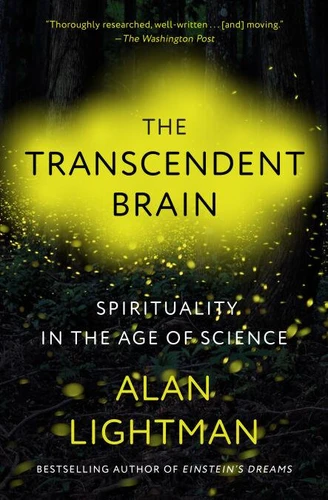
The Transcendent Brain. Spirituality in the Age of Science
Par :Formats :
Disponible dans votre compte client Decitre ou Furet du Nord dès validation de votre commande. Le format ePub protégé est :
- Compatible avec une lecture sur My Vivlio (smartphone, tablette, ordinateur)
- Compatible avec une lecture sur liseuses Vivlio
- Pour les liseuses autres que Vivlio, vous devez utiliser le logiciel Adobe Digital Edition. Non compatible avec la lecture sur les liseuses Kindle, Remarkable et Sony
- Non compatible avec un achat hors France métropolitaine
 , qui est-ce ?
Notre partenaire de plateforme de lecture numérique où vous retrouverez l'ensemble de vos ebooks gratuitement
Pour en savoir plus sur nos ebooks, consultez notre aide en ligne ici
C'est si simple ! Lisez votre ebook avec l'app Vivlio sur votre tablette, mobile ou ordinateur :

- Nombre de pages208
- FormatePub
- ISBN978-0-593-31742-6
- EAN9780593317426
- Date de parution14/03/2023
- Protection num.Adobe DRM
- Taille16 Mo
- Infos supplémentairesepub
- ÉditeurVintage
Résumé
From the acclaimed author of Einstein's Dreams comes a rich, fascinating answer to the question, Can the scientifically inclined still hold space for spirituality? "Lightman.belongs to a noble tradition of science writers, including Oliver Sacks and Lewis Thomas, who can poke endlessly into a subject and.stir up fresh embers of wonder." -The Wall Street JournalGazing at the stars, falling in love, or listening to music, we sometimes feel a transcendent connection with a cosmic unity and things larger than ourselves.
But these experiences are not easily understood by science, which holds that all things can be explained in terms of atoms and molecules. Is there space in our scientific worldview for these spiritual experiences? According to acclaimed physicist and novelist Alan Lightman, there may be. Drawing on intellectual history and conversations with contemporary scientists, philosophers, and psychologists, Lightman asks a series of thought-provoking questions that illuminate our strange place between the world of particles and forces and the world of complex human experience.
Can strict materialism explain our appreciation of beauty? Or our feelings of connection to nature and to other people? Is there a physical basis for consciousness, the most slippery of all scientific problems? Lightman weaves these investigations together to propose what he calls "spiritual materialism"- the belief that we can embrace spiritual experiences without letting go of our scientific worldview.
In his view, the breadth of the human condition is not only rooted in material atoms and molecules but can also be explained in terms of Darwinian evolution. What is revealed in this lyrical, enlightening book is that spirituality may not only be compatible with science, it also ought to remain at the core of what it means to be human.
But these experiences are not easily understood by science, which holds that all things can be explained in terms of atoms and molecules. Is there space in our scientific worldview for these spiritual experiences? According to acclaimed physicist and novelist Alan Lightman, there may be. Drawing on intellectual history and conversations with contemporary scientists, philosophers, and psychologists, Lightman asks a series of thought-provoking questions that illuminate our strange place between the world of particles and forces and the world of complex human experience.
Can strict materialism explain our appreciation of beauty? Or our feelings of connection to nature and to other people? Is there a physical basis for consciousness, the most slippery of all scientific problems? Lightman weaves these investigations together to propose what he calls "spiritual materialism"- the belief that we can embrace spiritual experiences without letting go of our scientific worldview.
In his view, the breadth of the human condition is not only rooted in material atoms and molecules but can also be explained in terms of Darwinian evolution. What is revealed in this lyrical, enlightening book is that spirituality may not only be compatible with science, it also ought to remain at the core of what it means to be human.
A propos de Alan Lightman
3,99 €
9,17 €
17,19 €
4,49 €
Einstein's Dreams
E-book
3,99 €
GOOD BENITO. A Novel
E-book
11,46 €
Dance for Two. Essays
E-book
17,19 €
Reunion
E-book
10,31 €
Ghost. A Novel
E-book
11,46 €

The Diagnosis. A Novel
E-book
11,46 €
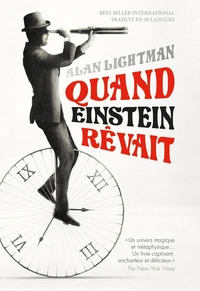
Quand Einstein rêvait
Grand Format
19,90 €