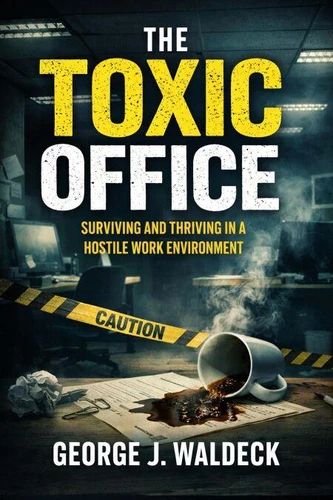
The Toxic OfficePower, Silence, and the Smiling Liarby George J. WaldeckMost toxic workplaces don't look toxic. They look calm. They look professional. They look functional enough that no one wants to ask hard questions. The Toxic Office examines how manipulation survives inside ordinary organizations, not through shouting or open conflict, but through quiet conversations, misplaced trust, and the unspoken pressure to stay silent.
It explores how one individual can influence an entire workplace without authority, how complaints disappear without resolution, and why good people often leave quietly after years of loyalty. This is not a revenge story. It is not a diagnosis. It is an examination of patterns that repeat across industries, roles, and cultures. Drawing on composite experiences, the book looks at psychological bullying, leadership blindness, and the systems that protect the wrong people while wearing the language of professionalism.
It asks why managers miss what becomes obvious in hindsight, why employees doubt themselves instead of the environment, and why silence so often feels safer than truth. Written for employees, managers, supervisors, and business owners, The Toxic Office does not offer slogans or quick fixes. It offers clarity. And it makes one thing clear: when people leave quietly, the damage has already been done.
If you have ever worked in an environment where something felt wrong but could never quite be named, this book will feel uncomfortably familiar.
The Toxic OfficePower, Silence, and the Smiling Liarby George J. WaldeckMost toxic workplaces don't look toxic. They look calm. They look professional. They look functional enough that no one wants to ask hard questions. The Toxic Office examines how manipulation survives inside ordinary organizations, not through shouting or open conflict, but through quiet conversations, misplaced trust, and the unspoken pressure to stay silent.
It explores how one individual can influence an entire workplace without authority, how complaints disappear without resolution, and why good people often leave quietly after years of loyalty. This is not a revenge story. It is not a diagnosis. It is an examination of patterns that repeat across industries, roles, and cultures. Drawing on composite experiences, the book looks at psychological bullying, leadership blindness, and the systems that protect the wrong people while wearing the language of professionalism.
It asks why managers miss what becomes obvious in hindsight, why employees doubt themselves instead of the environment, and why silence so often feels safer than truth. Written for employees, managers, supervisors, and business owners, The Toxic Office does not offer slogans or quick fixes. It offers clarity. And it makes one thing clear: when people leave quietly, the damage has already been done.
If you have ever worked in an environment where something felt wrong but could never quite be named, this book will feel uncomfortably familiar.


 , qui est-ce ?
