SOLDES
Jusqu'à -70% sur une sélection d'articles*

Nouveauté
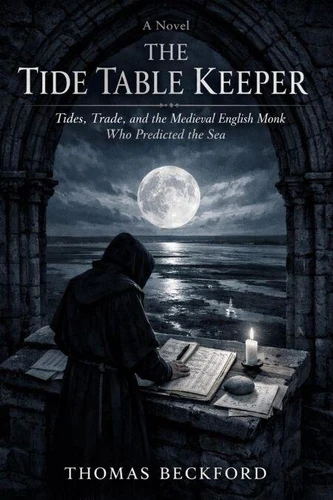
The Tide Table Keeper: Tides, Trade, and the Medieval English Monk Who Predicted the Sea
Par :Formats :
Disponible dans votre compte client Decitre ou Furet du Nord dès validation de votre commande. Le format ePub est :
- Compatible avec une lecture sur My Vivlio (smartphone, tablette, ordinateur)
- Compatible avec une lecture sur liseuses Vivlio
- Pour les liseuses autres que Vivlio, vous devez utiliser le logiciel Adobe Digital Edition. Non compatible avec la lecture sur les liseuses Kindle, Remarkable et Sony
 , qui est-ce ?
Notre partenaire de plateforme de lecture numérique où vous retrouverez l'ensemble de vos ebooks gratuitement
Pour en savoir plus sur nos ebooks, consultez notre aide en ligne ici
C'est si simple ! Lisez votre ebook avec l'app Vivlio sur votre tablette, mobile ou ordinateur :

- FormatePub
- ISBN8235617070
- EAN9798235617070
- Date de parution18/05/2026
- Protection num.pas de protection
- Infos supplémentairesepub
- ÉditeurIoakim Ioakim
Résumé
Before GPS. Before satellites. Before anyone thought to ask. Every morning, the Severn rose and swallowed the world. Every evening, it gave it back. And for centuries, no one in England could tell you exactly when. It is 1200 CE. Bristol is a city built on water it cannot fully read. Ships wait at the mouth of the Avon, crews idle, cargo sweating in the hold, merchants pacing the quayside, all of them dependent on a small brotherhood of pilots who guard their knowledge of the tides the way a guild guards a trade secret.
Because that is exactly what it is. The pilots know when the water will come. You do not. And the difference is money. Brother Aldric is a canon at St. Augustine's Abbey. He is not a rebel. He is not a visionary. He is a quiet, methodical man who cannot stop staring at the river. He has been measuring the tides for months, scratching marks on a flat stone with a piece of chalk, filling a logbook that nobody asked him to fill.
He is looking for something he cannot yet name: the pattern beneath the pattern, the number behind the water. And when he finds it, it does not feel like triumph. It feels like the beginning of trouble. Because what Aldric has built, in the language of celestial mathematics and patient observation, is a table. A simple document. Columns of numbers on vellum. Predictions, to within half an hour, of when the tide will be high at Bristol for the next twelve months.
He has, without meaning to, threatened an economy. The Tide Table Keeper is a story about what knowledge costs the person who makes it. It is set in a world where information is not shared freely but hoarded carefully, where the exclusive possession of what you know is the foundation of what you earn, and where a monk with a logbook is not a scholar but a liability. The pilots' guild moves against Aldric with the slow, patient efficiency of people who have been protecting their income for a long time.
They have lawyers. They have friends on the merchant council. They have a man named Richard Carver who understands that the best way to suppress a dangerous truth is not to deny it. It is to regulate it. What Aldric has on his side is harder to quantify: an abbot who chooses, at considerable institutional risk, to protect his scholar; a widow shipmaster named Margery who has been overpaying the guild for years and is entirely prepared to say so; a Basque captain who trusted the numbers and made it to the quays on the right tide; and the tables themselves, which keep being right.
This is historical fiction rooted in the real mathematics of tidal prediction, the genuine trading history of medieval Bristol, and the documented science of one of the most extraordinary natural phenomena in the world. The Severn Estuary still holds the second highest tidal range on earth. The calculations in these pages are not invented. The politics around them are not surprising. Both remain, in their essentials, entirely contemporary.
We have always known things we were not supposed to share. We have always had systems built to profit from what other people do not know. And there have always been people, not heroes exactly, just people with better-than-average patience and a stubborn commitment to accuracy, who decided that the truth was worth writing down anyway. The tide does not care about the guild. It comes when it comes. Aldric figured out when that was.
This is the story of what happened next. For readers of The Name of the Rose, Pillars of the Earth, and The Physician - and for anyone who has ever suspected that the most dangerous thing a person can do is be precisely, provably right.
Because that is exactly what it is. The pilots know when the water will come. You do not. And the difference is money. Brother Aldric is a canon at St. Augustine's Abbey. He is not a rebel. He is not a visionary. He is a quiet, methodical man who cannot stop staring at the river. He has been measuring the tides for months, scratching marks on a flat stone with a piece of chalk, filling a logbook that nobody asked him to fill.
He is looking for something he cannot yet name: the pattern beneath the pattern, the number behind the water. And when he finds it, it does not feel like triumph. It feels like the beginning of trouble. Because what Aldric has built, in the language of celestial mathematics and patient observation, is a table. A simple document. Columns of numbers on vellum. Predictions, to within half an hour, of when the tide will be high at Bristol for the next twelve months.
He has, without meaning to, threatened an economy. The Tide Table Keeper is a story about what knowledge costs the person who makes it. It is set in a world where information is not shared freely but hoarded carefully, where the exclusive possession of what you know is the foundation of what you earn, and where a monk with a logbook is not a scholar but a liability. The pilots' guild moves against Aldric with the slow, patient efficiency of people who have been protecting their income for a long time.
They have lawyers. They have friends on the merchant council. They have a man named Richard Carver who understands that the best way to suppress a dangerous truth is not to deny it. It is to regulate it. What Aldric has on his side is harder to quantify: an abbot who chooses, at considerable institutional risk, to protect his scholar; a widow shipmaster named Margery who has been overpaying the guild for years and is entirely prepared to say so; a Basque captain who trusted the numbers and made it to the quays on the right tide; and the tables themselves, which keep being right.
This is historical fiction rooted in the real mathematics of tidal prediction, the genuine trading history of medieval Bristol, and the documented science of one of the most extraordinary natural phenomena in the world. The Severn Estuary still holds the second highest tidal range on earth. The calculations in these pages are not invented. The politics around them are not surprising. Both remain, in their essentials, entirely contemporary.
We have always known things we were not supposed to share. We have always had systems built to profit from what other people do not know. And there have always been people, not heroes exactly, just people with better-than-average patience and a stubborn commitment to accuracy, who decided that the truth was worth writing down anyway. The tide does not care about the guild. It comes when it comes. Aldric figured out when that was.
This is the story of what happened next. For readers of The Name of the Rose, Pillars of the Earth, and The Physician - and for anyone who has ever suspected that the most dangerous thing a person can do is be precisely, provably right.