SOLDES
Jusqu'à -70% sur une sélection d'articles*

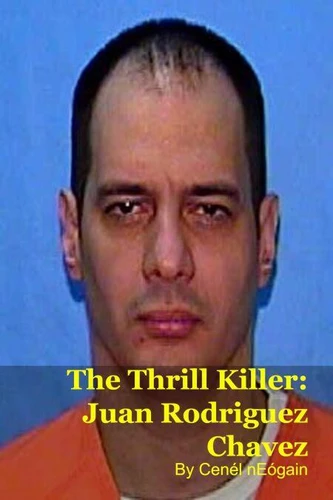
The Thrill Killer: Juan Rodriguez Chavez
Par :Formats :
Disponible dans votre compte client Decitre ou Furet du Nord dès validation de votre commande. Le format ePub est :
- Compatible avec une lecture sur My Vivlio (smartphone, tablette, ordinateur)
- Compatible avec une lecture sur liseuses Vivlio
- Pour les liseuses autres que Vivlio, vous devez utiliser le logiciel Adobe Digital Edition. Non compatible avec la lecture sur les liseuses Kindle, Remarkable et Sony
 , qui est-ce ?
Notre partenaire de plateforme de lecture numérique où vous retrouverez l'ensemble de vos ebooks gratuitement
Pour en savoir plus sur nos ebooks, consultez notre aide en ligne ici
C'est si simple ! Lisez votre ebook avec l'app Vivlio sur votre tablette, mobile ou ordinateur :

- FormatePub
- ISBN8233128561
- EAN9798233128561
- Date de parution14/02/2026
- Protection num.pas de protection
- Infos supplémentairesepub
- ÉditeurLinda Balsamo
Résumé
The Thrill Killer: Juan Rodriguez ChavezThe Thrill Killer examines the 1995 Dallas murder spree that claimed eleven lives through the lens of institutional failure rather than individual pathology. Juan Rodriguez Chavez was not born a killer; he was systematically created by decades of cascading failures across education, corrections, parole, and gang intervention systems. This forensic and criminological analysis reconstructs how a seventeen-year-old convicted of a single murder emerged from nine years in Texas prisons as a radicalized, tactically sophisticated predator whose violence escalated from opportunistic robbery-murder to sadistic thrill-killing.
Drawing on trial transcripts, appellate decisions, victim testimony, and institutional records, this book recovers the voices of those most affected by the violence while providing unflinching examination of the machinery that produced it. From Chavez's disappearance from Dallas schools in ninth grade through his recruitment by the Texas Syndicate, from his premature parole despite forty documented prison violations to the investigation that initially failed to connect his crimes, each chapter reveals how systems designed to protect the public instead facilitated catastrophe.
The analysis extends beyond historical documentation to assess whether the reforms implemented since 2003 have adequately addressed the structural failures that made the summer of 1995 possible, offering lessons for preventing future tragedies through genuine systemic transformation rather than superficial reform.
Drawing on trial transcripts, appellate decisions, victim testimony, and institutional records, this book recovers the voices of those most affected by the violence while providing unflinching examination of the machinery that produced it. From Chavez's disappearance from Dallas schools in ninth grade through his recruitment by the Texas Syndicate, from his premature parole despite forty documented prison violations to the investigation that initially failed to connect his crimes, each chapter reveals how systems designed to protect the public instead facilitated catastrophe.
The analysis extends beyond historical documentation to assess whether the reforms implemented since 2003 have adequately addressed the structural failures that made the summer of 1995 possible, offering lessons for preventing future tragedies through genuine systemic transformation rather than superficial reform.