
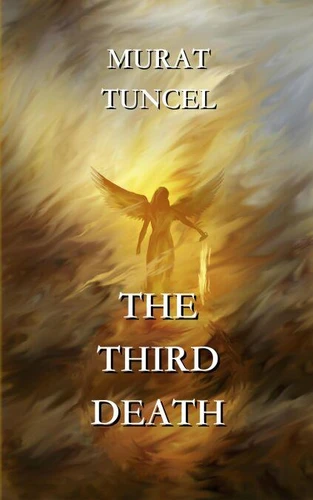
The Third Death
Par :Formats :
Disponible dans votre compte client Decitre ou Furet du Nord dès validation de votre commande. Le format ePub est :
- Compatible avec une lecture sur My Vivlio (smartphone, tablette, ordinateur)
- Compatible avec une lecture sur liseuses Vivlio
- Pour les liseuses autres que Vivlio, vous devez utiliser le logiciel Adobe Digital Edition. Non compatible avec la lecture sur les liseuses Kindle, Remarkable et Sony
 , qui est-ce ?
Notre partenaire de plateforme de lecture numérique où vous retrouverez l'ensemble de vos ebooks gratuitement
Pour en savoir plus sur nos ebooks, consultez notre aide en ligne ici
C'est si simple ! Lisez votre ebook avec l'app Vivlio sur votre tablette, mobile ou ordinateur :

- FormatePub
- ISBN8201527389
- EAN9798201527389
- Date de parution15/04/2021
- Protection num.pas de protection
- Infos supplémentairesepub
- ÉditeurJL
Résumé
This is the story of the life of a Hungarian man living through the most turbulent years of the twentieth century. Born the youngest of three brothers and one sister Galgoczy, was denied a normal childhood by the chaos of the first world war. His father, a sergeant in the Hungarian army, was absent throughout the war years and did not return home permanently after the armistice but returned to soldiering in the south of Hungary.
Galgoczy's father could only return home for a few days at a time on rare occasions and the growing boy missed him and dreamt of his return continually. The nationalist movement in Germany rose to power during Galgoczy's adolescence. In the thirties Germans began to arrive in Hungary to buy large tracts of land as farms. One such farm was built near Galgoczy's home. His mother began working at the farm believing that it would bring a better future for her children.
During the war when Germany began to occupy Hungary, the local population rebelled and during the struggle the local revolutionary committee didn't want local people, including Galgoczy's mother, to work for the Germans. She continued to work at the farm to feed her family, believing that the committee wouldn't harm a soldier's wife. It was at this time that Galgoczy's eldest brother, Anton, left home when he was conscripted by the resistance.
Galgoczy's father could only return home for a few days at a time on rare occasions and the growing boy missed him and dreamt of his return continually. The nationalist movement in Germany rose to power during Galgoczy's adolescence. In the thirties Germans began to arrive in Hungary to buy large tracts of land as farms. One such farm was built near Galgoczy's home. His mother began working at the farm believing that it would bring a better future for her children.
During the war when Germany began to occupy Hungary, the local population rebelled and during the struggle the local revolutionary committee didn't want local people, including Galgoczy's mother, to work for the Germans. She continued to work at the farm to feed her family, believing that the committee wouldn't harm a soldier's wife. It was at this time that Galgoczy's eldest brother, Anton, left home when he was conscripted by the resistance.
A propos de Murat Tuncel


Inanna
E-book
8,99 €
8,99 €