SOLDES
Jusqu'à -70% sur une sélection d'articles*

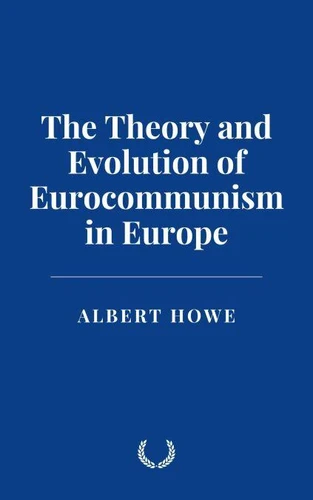
The Theory and Evolution of Eurocommunism in Europe
Par :Formats :
Disponible dans votre compte client Decitre ou Furet du Nord dès validation de votre commande. Le format ePub est :
- Compatible avec une lecture sur My Vivlio (smartphone, tablette, ordinateur)
- Compatible avec une lecture sur liseuses Vivlio
- Pour les liseuses autres que Vivlio, vous devez utiliser le logiciel Adobe Digital Edition. Non compatible avec la lecture sur les liseuses Kindle, Remarkable et Sony
 , qui est-ce ?
Notre partenaire de plateforme de lecture numérique où vous retrouverez l'ensemble de vos ebooks gratuitement
Pour en savoir plus sur nos ebooks, consultez notre aide en ligne ici
C'est si simple ! Lisez votre ebook avec l'app Vivlio sur votre tablette, mobile ou ordinateur :

- FormatePub
- ISBN8230723257
- EAN9798230723257
- Date de parution27/01/2025
- Protection num.pas de protection
- Infos supplémentairesepub
- ÉditeurIndependently Published
Résumé
This book offers a comprehensive exploration of the theory, history, and legacy of Eurocommunism, a pivotal movement that reshaped the landscape of leftist politics in Europe and beyond. Emerging in the mid-20th century as a distinct response to the failures of Soviet-style socialism, Eurocommunism advocated for a pluralistic, democratic, and culturally engaged approach to Marxism, tailored to the unique conditions of Western European democracies.
Through twenty in-depth chapters, the book traces the origins of Eurocommunism, examining its intellectual foundations in the works of Antonio Gramsci, its political strategies under leaders like Enrico Berlinguer, Santiago Carrillo, and Georges Marchais, and its critical engagement with concepts such as democracy, cultural hegemony, and national sovereignty. It provides a detailed analysis of the movement's relationship with key historical events, including the Cold War, the collapse of the Eastern Bloc, and the rise of neoliberalism.
Drawing on primary sources, theoretical debates, and political developments, the book delves into the internal dynamics of major Eurocommunist parties, their alliances with socialist and social democratic movements, and their efforts to build broad-based coalitions with trade unions and grassroots organizations. It explores the movement's global influence, highlighting its impact on liberation movements, anti-colonial struggles, and progressive activism in Latin America, Africa, and Asia.
The book also critically examines Eurocommunism's decline in the late 20th century, its struggles to maintain ideological coherence, and the challenges posed by the fragmentation of the left and the ascendancy of neoliberalism. However, it argues that Eurocommunism's theoretical and political innovations remain deeply relevant in addressing contemporary crises, from economic inequality to climate change and the rise of authoritarianism.
Ultimately, this book positions Eurocommunism as both a historical phenomenon and a source of enduring inspiration, offering valuable insights into the possibilities and limitations of building a democratic, inclusive, and transformative socialism in an era of profound global challenges. It invites readers to reflect on the lessons of Eurocommunism and their applicability to the struggles of the 21st century, providing a foundation for reimagining the future of progressive politics.
Through twenty in-depth chapters, the book traces the origins of Eurocommunism, examining its intellectual foundations in the works of Antonio Gramsci, its political strategies under leaders like Enrico Berlinguer, Santiago Carrillo, and Georges Marchais, and its critical engagement with concepts such as democracy, cultural hegemony, and national sovereignty. It provides a detailed analysis of the movement's relationship with key historical events, including the Cold War, the collapse of the Eastern Bloc, and the rise of neoliberalism.
Drawing on primary sources, theoretical debates, and political developments, the book delves into the internal dynamics of major Eurocommunist parties, their alliances with socialist and social democratic movements, and their efforts to build broad-based coalitions with trade unions and grassroots organizations. It explores the movement's global influence, highlighting its impact on liberation movements, anti-colonial struggles, and progressive activism in Latin America, Africa, and Asia.
The book also critically examines Eurocommunism's decline in the late 20th century, its struggles to maintain ideological coherence, and the challenges posed by the fragmentation of the left and the ascendancy of neoliberalism. However, it argues that Eurocommunism's theoretical and political innovations remain deeply relevant in addressing contemporary crises, from economic inequality to climate change and the rise of authoritarianism.
Ultimately, this book positions Eurocommunism as both a historical phenomenon and a source of enduring inspiration, offering valuable insights into the possibilities and limitations of building a democratic, inclusive, and transformative socialism in an era of profound global challenges. It invites readers to reflect on the lessons of Eurocommunism and their applicability to the struggles of the 21st century, providing a foundation for reimagining the future of progressive politics.
A propos de Albert Howe


2,99 €


2,99 €

2,99 €


2,99 €

2,99 €

2,99 €

2,99 €

2,99 €