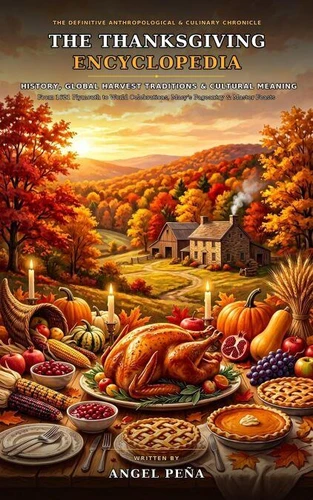
SynopsisThe Thanksgiving Encyclopedia is a comprehensive nonfiction exploration of the history, cultural evolution, indigenous heritage, global traditions, and culinary legacy of Thanksgiving. Beginning with the dramatic 1620 Mayflower voyage and the historic 1621 harvest gathering at Plymouth, the book examines the complex relationship between English colonists and the Wampanoag people, moving beyond simplified popular myths to explore diplomacy, survival, agriculture, cultural exchange, and historical memory.
The book then traces the development of Thanksgiving from Indigenous seasonal traditions and colonial harvest celebrations to its transformation into a national American holiday through the efforts of George Washington, Sarah Josepha Hale, Abraham Lincoln, and Franklin D. Roosevelt. It also explores Canadian Thanksgiving, European harvest festivals such as Germany's Erntedankfest and Slavic Dozynki, and Thanksgiving traditions in Liberia, Norfolk Island, and other parts of the world.
Alongside historical and cultural analysis, The Thanksgiving Encyclopedia explores traditional foods, harvest recipes, agricultural practices, religious customs, folk celebrations, family rituals, and the changing meaning of gratitude across generations. By connecting history, food, Indigenous heritage, religion, folklore, and contemporary cultural identity, the book presents Thanksgiving as far more than a single holiday-it is a global story of survival, community, harvest, remembrance, and human gratitude.
SynopsisThe Thanksgiving Encyclopedia is a comprehensive nonfiction exploration of the history, cultural evolution, indigenous heritage, global traditions, and culinary legacy of Thanksgiving. Beginning with the dramatic 1620 Mayflower voyage and the historic 1621 harvest gathering at Plymouth, the book examines the complex relationship between English colonists and the Wampanoag people, moving beyond simplified popular myths to explore diplomacy, survival, agriculture, cultural exchange, and historical memory.
The book then traces the development of Thanksgiving from Indigenous seasonal traditions and colonial harvest celebrations to its transformation into a national American holiday through the efforts of George Washington, Sarah Josepha Hale, Abraham Lincoln, and Franklin D. Roosevelt. It also explores Canadian Thanksgiving, European harvest festivals such as Germany's Erntedankfest and Slavic Dozynki, and Thanksgiving traditions in Liberia, Norfolk Island, and other parts of the world.
Alongside historical and cultural analysis, The Thanksgiving Encyclopedia explores traditional foods, harvest recipes, agricultural practices, religious customs, folk celebrations, family rituals, and the changing meaning of gratitude across generations. By connecting history, food, Indigenous heritage, religion, folklore, and contemporary cultural identity, the book presents Thanksgiving as far more than a single holiday-it is a global story of survival, community, harvest, remembrance, and human gratitude.

 , qui est-ce ?