The Terracotta Army is one of the greatest, and most famous, archaeological discoveries of all time. 6, 000 life-size figures of warriors and horses were interred in the Mausoleum of the First Emperor of China - each is individually carved, and they are thought to represent real members of the emperor's army. This is the remarkable story of their creation, the man who ordered them made, their rediscovery and their continuing legacy as a pre-eminent symbol of Chinese greatness.
The First Emperor, Qin Shi Huang, was king of the Chinese state of Qin and the first man to unite China into a single empire. He built the first Great Wall and brought a single written script to the whole country. He was an inspired and ruthless ruler, but one also beset by paranoia and a desire for immortality. He is still considered the founding father of the modern state of China. On his death in 210 BC he was buried in a giant mausoleum near modern-day Xi'an.
Legends of the treasures contained therein still tantalize the imagination today. In 1974 local farmers digging a well for water broke through into the burial mound and found the first of the Terracotta warriors. Further excavations have revealed the full splendour of the buried army. But the majority of the mausoleum is yet to be opened, including the burial chamber itself - myth tells us that amongst the treasures yet to be uncovered is a vast map of the First Emperor's kingdom with rivers marked with channels of flowing mercury.
The story of the First Emperor and the Terracotta Army is a fascinating one, not least for the discoveries yet to be made.
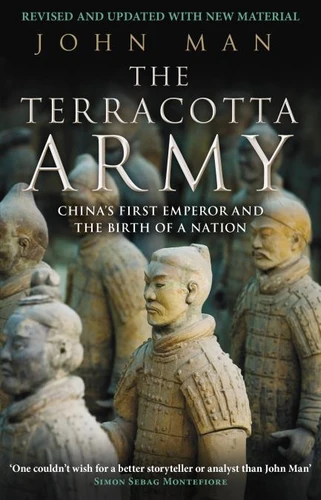
The Terracotta Army is one of the greatest, and most famous, archaeological discoveries of all time. 6, 000 life-size figures of warriors and horses were interred in the Mausoleum of the First Emperor of China - each is individually carved, and they are thought to represent real members of the emperor's army. This is the remarkable story of their creation, the man who ordered them made, their rediscovery and their continuing legacy as a pre-eminent symbol of Chinese greatness.
The First Emperor, Qin Shi Huang, was king of the Chinese state of Qin and the first man to unite China into a single empire. He built the first Great Wall and brought a single written script to the whole country. He was an inspired and ruthless ruler, but one also beset by paranoia and a desire for immortality. He is still considered the founding father of the modern state of China. On his death in 210 BC he was buried in a giant mausoleum near modern-day Xi'an.
Legends of the treasures contained therein still tantalize the imagination today. In 1974 local farmers digging a well for water broke through into the burial mound and found the first of the Terracotta warriors. Further excavations have revealed the full splendour of the buried army. But the majority of the mausoleum is yet to be opened, including the burial chamber itself - myth tells us that amongst the treasures yet to be uncovered is a vast map of the First Emperor's kingdom with rivers marked with channels of flowing mercury.
The story of the First Emperor and the Terracotta Army is a fascinating one, not least for the discoveries yet to be made.

 , qui est-ce ?