
Nouveauté
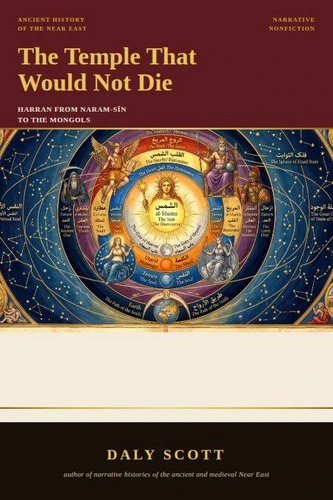
The Temple That Would Not Die: Harran from Naram-Sīn to the Mongols
Par :Formats :
Disponible dans votre compte client Decitre ou Furet du Nord dès validation de votre commande. Le format ePub est :
- Compatible avec une lecture sur My Vivlio (smartphone, tablette, ordinateur)
- Compatible avec une lecture sur liseuses Vivlio
- Pour les liseuses autres que Vivlio, vous devez utiliser le logiciel Adobe Digital Edition. Non compatible avec la lecture sur les liseuses Kindle, Remarkable et Sony
 , qui est-ce ?
Notre partenaire de plateforme de lecture numérique où vous retrouverez l'ensemble de vos ebooks gratuitement
Pour en savoir plus sur nos ebooks, consultez notre aide en ligne ici
C'est si simple ! Lisez votre ebook avec l'app Vivlio sur votre tablette, mobile ou ordinateur :

- FormatePub
- ISBN8235731233
- EAN9798235731233
- Date de parution08/07/2026
- Protection num.pas de protection
- Infos supplémentairesepub
- ÉditeurIoakim Ioakim
Résumé
The Temple That Would Not Die: Harran from Naram-Sin to the Mongols For three thousand years, the city of Harran stood at the crossroads of empires, its temple to the moon god Sin drawing the devotion of Akkadian kings, Assyrian emperors, and Roman pilgrims alike. Then, in 830 CE, an Abbasid caliph gave its pagan inhabitants an impossible choice: convert, claim protection under a name that was never theirs to claim, or die.
What they did next changed the intellectual history of two civilizations. The Mysterious Sabians of Harran traces one of history's most audacious acts of religious reinvention, from the ancient cult of the moon god through a desperate legal gambit that transformed star-worshippers into "People of the Book, " and into the astonishing two-century flowering that followed: a Neoplatonic theology sophisticated enough to shape Islamic mysticism, a mathematical dynasty whose discoveries anticipated modern calculus, and a body of astral magic that would resurface, centuries later, on the writing desks of Renaissance Florence.
Drawing on Arabic, Syriac, and Hebrew sources rarely brought together in one narrative, this book follows Harran from Sumerian antiquity to Mongol destruction and beyond, revealing how a small Mesopotamian city's fight for survival became a hidden foundation stone of Western esotericism itself.
What they did next changed the intellectual history of two civilizations. The Mysterious Sabians of Harran traces one of history's most audacious acts of religious reinvention, from the ancient cult of the moon god through a desperate legal gambit that transformed star-worshippers into "People of the Book, " and into the astonishing two-century flowering that followed: a Neoplatonic theology sophisticated enough to shape Islamic mysticism, a mathematical dynasty whose discoveries anticipated modern calculus, and a body of astral magic that would resurface, centuries later, on the writing desks of Renaissance Florence.
Drawing on Arabic, Syriac, and Hebrew sources rarely brought together in one narrative, this book follows Harran from Sumerian antiquity to Mongol destruction and beyond, revealing how a small Mesopotamian city's fight for survival became a hidden foundation stone of Western esotericism itself.