
Author
Nouveauté
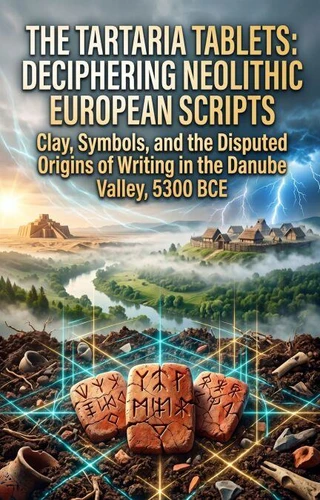
The Tartaria Tablets: Deciphering Neolithic European Scripts. Clay, Symbols, and the Disputed Origins of Writing in the Danube Valley, 5300 BCE
Par :Formats :
Disponible dans votre compte client Decitre ou Furet du Nord dès validation de votre commande. Le format ePub est :
- Compatible avec une lecture sur My Vivlio (smartphone, tablette, ordinateur)
- Compatible avec une lecture sur liseuses Vivlio
- Pour les liseuses autres que Vivlio, vous devez utiliser le logiciel Adobe Digital Edition. Non compatible avec la lecture sur les liseuses Kindle, Remarkable et Sony
 , qui est-ce ?
Notre partenaire de plateforme de lecture numérique où vous retrouverez l'ensemble de vos ebooks gratuitement
Pour en savoir plus sur nos ebooks, consultez notre aide en ligne ici
C'est si simple ! Lisez votre ebook avec l'app Vivlio sur votre tablette, mobile ou ordinateur :

- Nombre de pages152
- FormatePub
- ISBN978-3-565-58834-3
- EAN9783565588343
- Date de parution26/07/2026
- Protection num.pas de protection
- Taille908 Ko
- Infos supplémentairesepub
- ÉditeurEmphaloz Publishing House
Résumé
Did humanity's first script emerge not in the sun-baked cities of ancient Sumer, but in the lush river valleys of prehistoric Europe? Decades before the rise of Uruk, scribes in Transylvania pressed mysterious geometric symbols into wet river clay.
In 1961, three small artifacts pulled from a dirt trench in Tartaria shattered the accepted historical timeline. Dating to 5300 BCE, these intriguing clay tablets featured intricate glyphs nearly identical to early Mesopotamian proto-cuneiform, sparking an aggressive, decades-long academic war.
"The Tartaria Tablets" delivers a captivating investigation into the disputed origins of written language.
Corinne Clarkson meticulously audits the controversial excavation, the tragic laboratory baking error that incinerated critical carbon evidence, and the groundbreaking scientific advancements re-evaluating the site today. From high-tech neutron tomography to information theory and ancient economic networks, this comprehensive study challenges long-held historical orthodoxies. It explores whether these ancient marks represent administrative ledgers, sacred rituals, or an independent European leap into literacy. Meticulously researched and powerfully written, this essential volume invites historians, archaeologists, and curious minds to reconsider the true dawn of human communication.
Uncover the thrilling story behind the symbols that almost rewrote history.
Corinne Clarkson meticulously audits the controversial excavation, the tragic laboratory baking error that incinerated critical carbon evidence, and the groundbreaking scientific advancements re-evaluating the site today. From high-tech neutron tomography to information theory and ancient economic networks, this comprehensive study challenges long-held historical orthodoxies. It explores whether these ancient marks represent administrative ledgers, sacred rituals, or an independent European leap into literacy. Meticulously researched and powerfully written, this essential volume invites historians, archaeologists, and curious minds to reconsider the true dawn of human communication.
Uncover the thrilling story behind the symbols that almost rewrote history.