OFFRE LISEUSES
Une liseuse achetée = une housse offerte* jusqu'au 21 juin

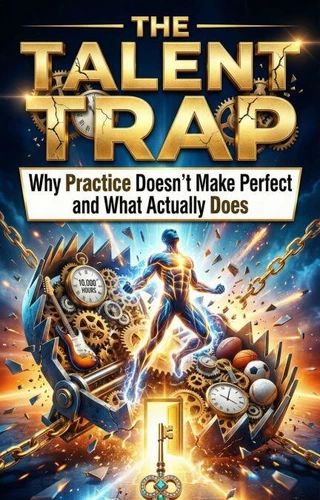
The Talent Trap. Why Practice Doesn't Make Perfect and What Actually Does
Par :Formats :
Disponible dans votre compte client Decitre ou Furet du Nord dès validation de votre commande. Le format ePub est :
- Compatible avec une lecture sur My Vivlio (smartphone, tablette, ordinateur)
- Compatible avec une lecture sur liseuses Vivlio
- Pour les liseuses autres que Vivlio, vous devez utiliser le logiciel Adobe Digital Edition. Non compatible avec la lecture sur les liseuses Kindle, Remarkable et Sony
 , qui est-ce ?
Notre partenaire de plateforme de lecture numérique où vous retrouverez l'ensemble de vos ebooks gratuitement
Pour en savoir plus sur nos ebooks, consultez notre aide en ligne ici
C'est si simple ! Lisez votre ebook avec l'app Vivlio sur votre tablette, mobile ou ordinateur :

- Nombre de pages163
- FormatePub
- ISBN978-3-565-22249-0
- EAN9783565222490
- Date de parution03/02/2026
- Protection num.pas de protection
- Taille605 Ko
- Infos supplémentairesepub
- ÉditeurEmphaloz Publishing House
Résumé
The "10, 000 Hour Rule"-the idea that anyone can master anything with enough practice-is one of the most popular ideas of our time. It is also, according to educational psychologist Robert Best, scientifically wrong. In "The Talent Trap, " Best debunks the oversimplification of Anders Ericsson's research popularized by Malcolm Gladwell.
Best argues that genetics (talent) play a massive, undeniable role that the self-help industry tries to hide.
He shows that in fields like sports or music, the "practice ceiling" exists: no amount of training will make a short person an NBA center. However, the book is not pessimistic. Best pivots to the concept of "Fit." Success comes not from brute-forcing a skill you aren't built for, but from "sampling" different fields to find where your natural aptitudes lie (the "Roger Federer model"). It is a guide to quitting early, pivoting often, and finding the path of least resistance to excellence.
He shows that in fields like sports or music, the "practice ceiling" exists: no amount of training will make a short person an NBA center. However, the book is not pessimistic. Best pivots to the concept of "Fit." Success comes not from brute-forcing a skill you aren't built for, but from "sampling" different fields to find where your natural aptitudes lie (the "Roger Federer model"). It is a guide to quitting early, pivoting often, and finding the path of least resistance to excellence.